10 Best Nano Fertilizer Suppliers for Global Buyers
Choosing a nano fertilizer supplier requires more than comparing prices or reading claims about particle size. Global buyers need evidence on nutrient composition, dispersion stability, packaging, storage conditions, and field performance. A clear technical data sheet should explain the product’s intended use and application rate. Ask how trials were conducted, which crops and soils were tested, and whether results can be independently reviewed. Small details matter: a sealed sample bottle, a batch number, and instructions that match the product label.
Nano-agriculture researcher M. R. Raliya’s published work explores how engineered materials can support nutrient delivery in agriculture. A careful paraphrase of that research is this: judge a formulation by reliable nutrient delivery, not by the word “nano” alone. That distinction is useful when reviewing the 10 best nano fertilizer suppliers for global buyers. Supplier quality can vary, and promising laboratory results do not always transfer to farmers’ fields. That gap deserves attention. The guide should therefore compare verifiable specifications, manufacturing transparency, technical support, and evidence from relevant trials. It should also acknowledge what remains uncertain, including performance across different soils and climates. No supplier is automatically the right choice for every crop or region. Buyers should verify claims directly, request documentation, and assess whether the product fits local agronomic needs before making a purchasing decision.
What Nano Fertilizers Are and How They Differ from Conventional Fertilizers
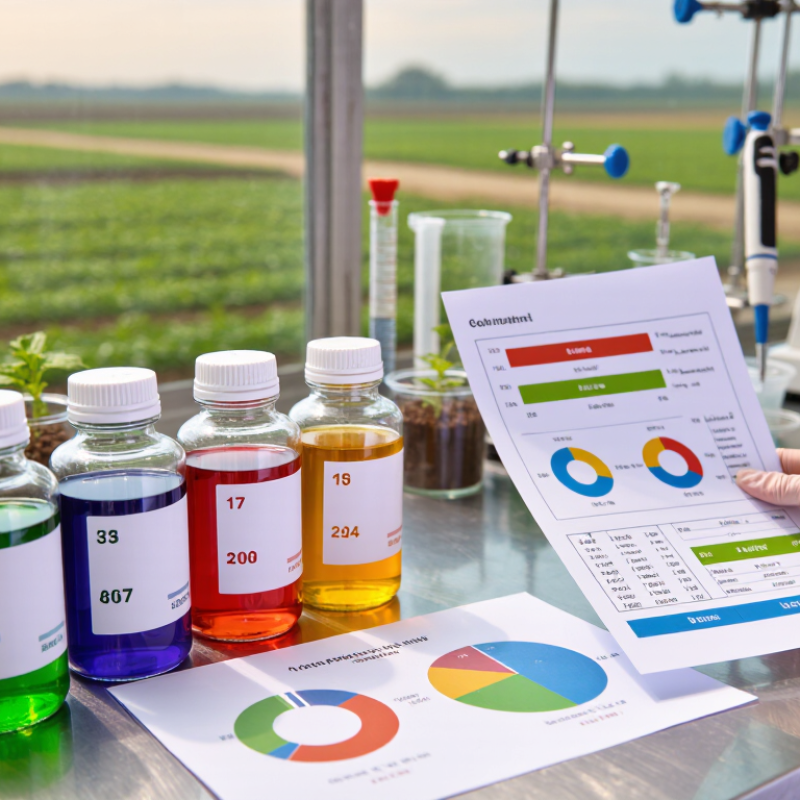
Nano fertilizers are nutrient products that use nanoscale particles, coatings, or carriers to deliver plant nutrients. Their design may help nutrients disperse, adhere to leaves, or release gradually near roots. The exact mechanism depends on the formulation. That matters.
Conventional fertilizers usually supply nutrients as granules, crystals, or dissolved salts. Their performance is generally described by nutrient content and application rate. Nano formulations may behave differently in water and soil, but “nano” alone does not guarantee better absorption or higher yields. Some products marketed this way may use coatings or fine suspensions rather than uniform nanoparticles.
For buyers, check the stated particle size, nutrient concentration, recommended dilution, and application method. Ask for trial results on the relevant crop and growing conditions. A small field test can reveal issues that a brochure cannot, such as settling in a spray tank or uneven leaf coverage. Evidence is still variable across products and environments. One awkward truth: more detailed specifications do not replace local testing. Compare results against a conventional fertilizer under the same conditions before changing a full-season program.
Nano Fertilizers vs. Conventional Fertilizers: Particle Size
The nanoscale is commonly defined as approximately 1–100 nanometers. For comparison, conventional fertilizer granules are often specified in millimeter-sized grades; 2–4 mm is a representative range, not a universal standard. Nano fertilizers can also use nanoscale coatings or nutrient carriers, so particle size alone does not describe every product.
How to Assess Nano Fertilizer Suppliers for Global Purchasing
When assessing nano fertilizer suppliers for global purchasing, look beyond the word “nano.” Ask for particle-size data, the measurement method, nutrient concentration, and batch-specific certificates of analysis. A precise number is useful only when the supplier explains how it was measured. Request safety and handling documents, plus clear storage and shelf-life guidance. Small details matter. A drum arriving warm after a long route may behave differently from a fresh sample.
Check whether the supplier can provide consistent batches, export-ready packaging, and shipment tracking. Ask how products are protected from moisture, heat, and leakage during transit. Then review trial data for crops and conditions similar to yours; results from another climate may not transfer neatly. That part is easy to overlook.
Independent testing can help confirm composition, while a small field trial can reveal mixing or application issues before a large order. Also confirm that documentation and product claims meet the requirements in the destination market. A responsive technical team is valuable, but vague answers about particle stability should prompt more questions. I would not treat polished brochures as proof. Compare evidence, service, and realistic delivery commitments together.
Ten Nano Fertilizer Suppliers Serving International Markets
Ten nano fertilizer suppliers serving international markets can differ sharply in formulation, documentation, and technical support. Buyers should compare more than quoted price. Ask for a current product specification, safety data sheet, and batch analysis showing nutrient content and particle-size range. Check whether the stated figures describe the finished product, not just a laboratory sample. Small details matter.
Export experience is useful, but destination requirements vary. Confirm available packaging sizes, storage conditions, shelf life, and shipping options before ordering. For example, a supplier should explain whether a liquid formulation needs protection from freezing or prolonged heat. Request clear guidance on mixing and application, then test a small area under local conditions. Results can depend on soil, crop, water quality, and timing. There is no universal outcome.
Technical claims deserve careful review. Ask what evidence supports them, and whether trials match your crop and growing environment. A responsive supplier should answer specific questions without promising guaranteed yield gains. That is not always easy to judge. Compare sample records, response times, and consistency between batches. Even a polished brochure can leave practical questions unanswered. When details remain unclear, pause before committing to a large shipment.
| Supplier Profile | Market Base | Potential Product Focus | International Buyer Checks | Best-Fit Buyer Need |
|---|---|---|---|---|
| Supplier 01 | India | Nano-scale nitrogen and micronutrient formulations | Verify product registration, nutrient analysis, label compliance, and destination-country import rules. | Buyers evaluating foliar nutrition products for large agricultural markets |
| Supplier 02 | China | Nano-enabled micronutrients and specialty nutrient blends | Request independent particle-size and nutrient-content tests, safety documentation, and export references. | Importers seeking a broad range of specialty fertilizer formats |
| Supplier 03 | United States | Research-led nutrient formulations and crop-specific products | Confirm applicable state and federal requirements, trial data, and claims permitted in the destination market. | Buyers prioritizing technical documentation and field-trial support |
| Supplier 04 | Germany | Specialty fertilizers and precision nutrient delivery | Check EU and destination-market registration, safety data sheets, and product composition certificates. | Distributors requiring detailed compliance and product documentation |
| Supplier 05 | Netherlands | Water-soluble and fertigation-compatible nutrient products | Validate solubility, mixing compatibility, storage stability, and local fertilizer authorization. | Greenhouse, horticulture, and controlled-irrigation buyers |
| Supplier 06 | Spain | Foliar nutrition and micronutrient products for specialty crops | Request crop-specific use directions, residue or safety information where relevant, and export documentation. | Buyers serving fruit, vegetable, and other high-value crop sectors |
| Supplier 07 | Brazil | Crop nutrition products designed for broad-acre agriculture | Confirm registration status, local-language labels, logistics conditions, and performance evidence for target crops. | Buyers supplying large-scale farming and regional distribution networks |
| Supplier 08 | Japan | Specialty formulations and precision-application products | Ask for full technical specifications, application protocols, and evidence supporting any nano-specific claims. | Buyers seeking differentiated products and detailed technical guidance |
| Supplier 09 | South Korea | Advanced agricultural inputs and foliar nutrient formulations | Verify manufacturing records, product consistency, import classification, and distributor support in the target market. | Importers looking for technically differentiated crop inputs |
| Supplier 10 | Israel | Water-efficient nutrient delivery and fertigation products | Check irrigation compatibility, water-quality requirements, product stability, and local registration needs. | Buyers serving drip-irrigated and water-limited farming systems |
| These are anonymous, illustrative supplier profiles—not verified company listings. Product availability, export capability, registrations, and performance vary by supplier and destination market; confirm all details directly before purchase. | ||||
Comparing Supplier Products, Certifications, and Distribution Networks
When comparing nano fertilizer suppliers, product specifications should go beyond a “nano” label. Request particle-size distribution, nutrient analysis, dispersion stability, and batch-specific certificates of analysis. Ask for independent test methods and replicated field-trial results across relevant soils and crops. Small details matter. FAO’s World Fertilizer Trends and Outlook to 2022 projected global nutrient demand at 197.1 million tonnes in 2022; that figure describes conventional fertilizer nutrients, not nano fertilizer sales, but it shows the scale behind buyer quality checks.
Certifications need careful reading. ISO 9001 can indicate a quality-management system, while ISO/IEC 17025 accreditation concerns a testing laboratory’s competence. Neither alone proves a fertilizer’s field performance or suitability for every market. Check product registrations and label requirements in the destination country, and verify that certificates cover the actual manufacturing site. A polished brochure is not enough.
Distribution networks affect product condition and delivery reliability. Compare local warehouses, shipping lead times, storage guidance, and procedures for damaged or settled product. IFA’s fertilizer outlook reports are useful for understanding market supply pressures, but they do not replace supplier-level evidence. Ask for recent shipment records and instructions for re-dispersion after transport. I would still treat small-scale local trials as essential; supplier data can look convincing, yet perform differently in a buyer’s field.
What Global Buyers Should Verify Before Placing an Order
Before ordering nano fertilizer, ask what “nano” means in the product specification. Request the composition, particle-size distribution, test method, and a batch-specific certificate of analysis. Small details matter. A supplier should identify the laboratory and provide results that match the shipped lot, not just a generic sample. OECD’s guidance on testing manufactured nanomaterials highlights how sample preparation can affect measurements, so ask how samples were dispersed and tested.
Check evidence from field trials, not only greenhouse photographs. Trials should name the crop, soil conditions, application rate, comparison fertilizer, and measured outcomes.
IFA’s 2024 Short-Term Fertilizer Outlook estimated global fertilizer consumption at 192.5 million tonnes of nutrients in 2023/24, about 4% above the previous year. That broad market figure is not proof of nano-product performance; it does underline why buyers should verify supply capacity and product consistency.
Ask for production lead times, storage instructions, shelf-life data, and a written process for handling damaged or off-specification batches.
Confirm that the product’s labeling and documentation meet the requirements of the destination market, and check whether claimed benefits are supported by independent data. Ask for raw records. A polished brochure can still leave gaps: one useful question is whether particle size was measured on the finished formulation or only on a laboratory sample. Also agree on packaging, transport conditions, and acceptance criteria before payment.
Related Posts
-
Top 10 Best Fertilizer Companies You Should Know?
-

What is Professional Fertilizer and How Can It Boost Your Garden's Growth?
-
How to Optimize Southern Petrochemical Processes for Maximum Efficiency in 2025
-

2026 Top Agricultural Fertilizer Trends to Watch Out For?
-

2026 Top Tips to Buy Fertilizer Online Effectively?
-

Why Choose an Organic Fertilizer Company for Global Supply?