
China Top Fertilizer Price for Global Buyers?
China’s fertilizer market attracts global buyers with competitive offers, broad production capacity, and efficient port access. Yet “the lowest price” is rarely the complete answer. Fertilizer price changes with product grade, feedstock costs, energy markets, seasonality, packaging, and destination freight.
A practical comparison should identify the exact product first. Urea, monoammonium phosphate, diammonium phosphate, and compound fertilizers follow different pricing patterns. A 50-kilogram bag may show one price, while a bulk vessel quotation tells another story. Buyers should compare specifications, minimum order quantities, payment terms, inspection arrangements, and delivery conditions such as FOB or CFR. Small details matter.
Reliable suppliers usually provide current technical sheets, batch information, factory details, and commercially verifiable quotations. Independent inspection can confirm nutrient content, moisture, particle size, and packaging quality before shipment. Import duties, port charges, registration requirements, and inland transport may also change the final landed cost. Numbers should be checked twice.
In real procurement, a cheap offer can become expensive after delays or quality disputes. That assumption can fail. Market reports offer useful direction, but they cannot replace supplier verification and shipment-specific calculations. Buyers should request several comparable quotations and record the quotation date, currency, loading port, product grade, and validity period. Even then, uncertainty remains. Weather, crop demand, currency movements, and policy changes can quickly influence fertilizer price. This guide examines China’s leading fertilizer prices through a buyer-focused lens, combining market context with practical checks for safer, clearer, and more informed purchasing decisions.
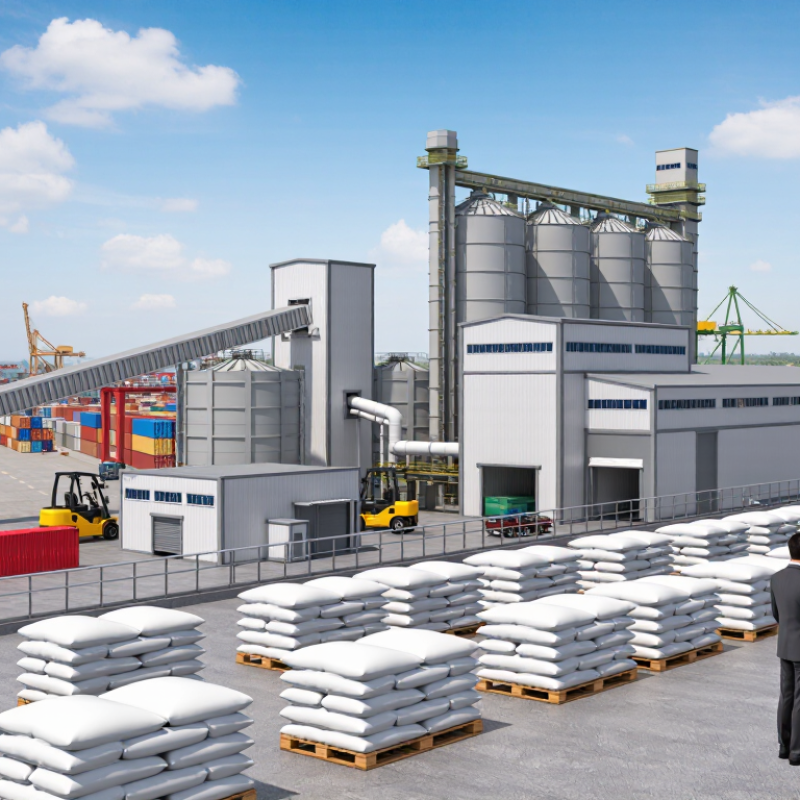
Types of Fertilizers Commonly Exported from China
China Top Fertilizer Price for Global Buyers?
Types of Fertilizers Commonly Exported from China
China exports several fertilizer types for different crops, soils, and farming systems. Urea remains widely traded because of its high nitrogen content and flexible application. It commonly appears as white prills or granules. Ammonium sulfate supplies nitrogen and sulfur, making it useful for crops with sulfur shortages. Buyers should check particle size, moisture, and nitrogen content before comparing offers.
Phosphate fertilizers, including monoammonium phosphate and diammonium phosphate, support root development and early plant growth. Compound NPK fertilizers combine nitrogen, phosphorus, and potassium in specific ratios. These products suit farms seeking simpler application. Potassium chloride is also exported for potassium management, but chloride sensitivity matters for crops such as tobacco, potatoes, and some fruits.
Price is only one part of a reliable purchase. A professional buyer should review the certificate of analysis, safety data sheet, origin documents, and current import rules. Packaging details matter too. Moisture can cause caking during a long sea voyage. Strong woven bags and inner liners reduce that risk. Independent inspection may confirm weight and composition before loading. Still, no document removes every uncertainty. Soil tests, seasonal demand, port conditions, and exchange rates can change the real cost. Some buyers focus too heavily on the lowest quotation. That choice can become expensive later.
China Top Fertilizer Price for Global Buyers? – Types of Fertilizers Commonly Exported from China
The table below summarizes commonly exported fertilizer categories from China, their typical nutrient profiles, and indicative non-brand FOB China price ranges for bulk or standard export-grade products.
| Fertilizer Type | Typical Grade | Main Nutrient Content | Indicative FOB China Price | Common Export Form | Typical Overseas Uses | Export Considerations |
|---|---|---|---|---|---|---|
| Urea | Nitrogen fertilizer | 46% nitrogen (N) | US$250–400 / metric ton | Granular or prilled | Field crops, rice, wheat, corn, fertilizer blending | Price is highly affected by natural-gas costs, coal prices, seasonality, and export policy. |
| Ammonium Sulfate | Nitrogen + sulfur | About 21% N and 24% sulfur (S) | US$100–180 / metric ton | Crystal or granular | Soils requiring sulfur; corn, oilseeds, vegetables | Often selected where sulfur supplementation is needed; granulation and particle size affect value. |
| Diammonium Phosphate (DAP) | Phosphate fertilizer | Commonly 18% N and 46% P₂O₅ | US$500–650 / metric ton | Granular | Base application for cereals, oilseeds, and plantations | Phosphate-rock and sulfur prices, freight, and destination import rules influence the final cost. |
| Monoammonium Phosphate (MAP) | Phosphate fertilizer | Commonly 11% N and 52% P₂O₅ | US$500–650 / metric ton | Granular or crystalline | Starter fertilizer, fertigation, and compound fertilizer production | Suitable for many blending programs; exact grade and water solubility should be confirmed. |
| Triple Superphosphate (TSP) | High-phosphate fertilizer | Typically 44–46% P₂O₅ | US$400–550 / metric ton | Granular | Direct soil application and fertilizer blending | Contains little or no nitrogen; soil phosphate requirements and local regulations should be reviewed. |
| NPK Compound Fertilizer | Multi-nutrient fertilizer | Examples include 15-15-15, 16-16-16, and 20-20-20 | US$250–450 / metric ton | Granular, bulk blend, or powder | General crop nutrition, horticulture, and plantation farming | Price depends on the N-P-K ratio, raw materials, granule quality, packaging, and customized formulation. |
| Potassium Chloride (MOP) | Potash fertilizer | Usually 60% K₂O; approximately claus 47% potassium (K) | US$250–400 / metric ton | Standard or granular | Cereals, oilseeds, sugar crops, and broad-acre farming | Chloride sensitivity of the crop and the destination country's potash import rules are important. |
| Potassium Sulfate (SOP) | Chloride-free potash | Commonly 50% K₂O and about 17–18% sulfur | US$350–500 / metric ton | Crystal, powder, or granular | Fruit, vegetables, tobacco, and chloride-sensitive crops | Usually priced above MOP because of its chloride-free profile and specialized production route. |
| Water-Soluble NPK | Specialty fertilizer | Formulations vary, such as 20-20-20 or 13-40-13 | US$400–800 / metric ton | Fine crystalline powder | Drip irrigation, greenhouse crops, nurseries, and foliar feeding | Water solubility, chloride level, trace elements, and moisture protection are key purchasing criteria. |
| Calcium Nitrate | Water-soluble nitrogen | Approximately 15.5% N and 19% calcium (Ca) | US$300–500 / metric ton | Granular or crystalline | Protected cultivation, fertigation, vegetables, and fruit crops | Packaging and moisture control are important because the product is hygroscopic. |
| Magnesium Sulfate | Magnesium + sulfur | Common grades contain about 9.8% magnesium (Mg) and 13% sulfur (S) | US$80–180 / metric ton | Crystal, granular, or powder | Correcting magnesium deficiency in field and horticultural crops | Heptahydrate and monohydrate products differ in analysis, moisture, and application rate. |
Related Posts
-

How to Choose the Best Farm Fertilizer for Your Crops?
-
Top 10 Fertilizer Companies Worldwide for Global Buyers
-
Which Is the Best Fertilizer Company in China?
-
Top 10 Factors Affecting Fertilizer Costs You Need to Know
-

2026 Top Types of Farm Fertilizer for Global Buyers
-
How to Start Organic Fertilizer Production for Global Markets?