How to Choose the Right Agricultural Fertilizer for Maximum Crop Yield
Choosing the right agricultural fertilizer is a critical step in optimizing crop yields and ensuring sustainable farming practices. With an array of fertilizers available on the market, it can be overwhelming for farmers and growers to determine which option best meets their soil and crop requirements. Understanding the various types of agricultural fertilizers—whether organic or inorganic—and how they interact with soil chemistry is vital for making informed decisions that can enhance plant growth and productivity.
Moreover, the effectiveness of agricultural fertilizer is not solely dependent on its type but also on its application rate, timing, and method. Factors such as soil health, the specific nutrient needs of crops, and environmental conditions play a significant role in how fertilizers perform. By assessing soil nutrient levels and understanding plant requirements, farmers can tailor their fertilization strategies to achieve maximum crop yield while minimizing waste and environmental impact. In this guide, we will explore essential considerations and practical tips to help you select the right agricultural fertilizer for your specific agricultural goals.

Understanding Soil Composition and Nutrient Needs for Crops
Understanding the soil composition and nutrient needs of crops is essential for optimizing agricultural fertilizer use and achieving maximum crop yields. Soil is a complex ecosystem composed of minerals, organic matter, water, and air, and its composition varies significantly across different regions. According to the Food and Agriculture Organization (FAO), the soil nutrient content directly affects crop production. For instance, nitrogen, phosphorus, and potassium are the primary macronutrients that crops require, with nitrogen being crucial for leaf development and overall growth. A study published in the "Journal of Soil Science and Plant Nutrition" indicated that increasing nitrogen levels can enhance crop yields by up to 40%, underlining the importance of proper nutrient management.
Moreover, understanding soil pH is vital, as it influences nutrient availability. Most crops thrive in a pH range of 6-7; however, certain crops may require more acidic or alkaline conditions. For example, acidic soils can fix phosphorus, limiting its availability to crops. The United States Department of Agriculture (USDA) reports that nearly 40% of the farmlands in the U.S. face nutrient imbalances, which can severely affect agricultural output. Conducting soil tests can help farmers identify specific deficiencies and tailor their fertilization strategies accordingly, leading to more sustainable practices and better economic outcomes. By aligning fertilizer use with the specific nutrient needs dictated by soil composition, farmers can significantly enhance their crop yields while maintaining soil health.
Evaluating Different Types of Fertilizers: Organic vs. Synthetic
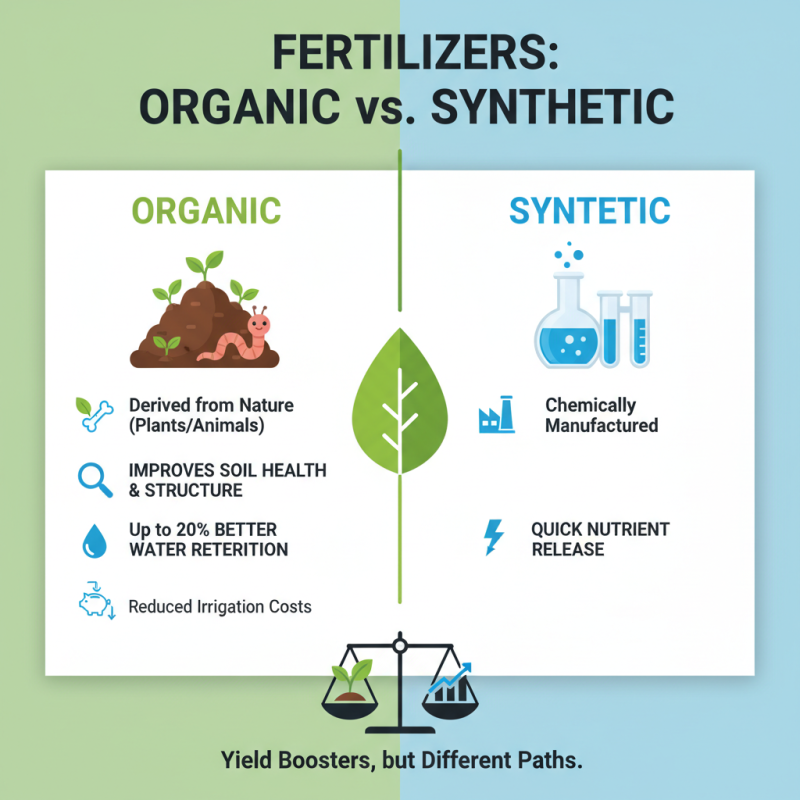
When evaluating fertilizers, it's crucial to understand the differences between organic and synthetic options, as they each have unique benefits and challenges that can significantly impact crop yield. Organic fertilizers, often derived from plant or animal matter, not only enhance soil health but also improve its structure over time. Research indicates that organic matter can potentially increase soil's water retention capability by up to 20%, leading to reduced irrigation costs and improved resilience against drought.
In contrast, synthetic fertilizers are formulated to provide specific nutrients in a concentrated form, which can lead to rapid crop growth. According to a report by the Food and Agriculture Organization (FAO), the precision of nutrient delivery offered by synthetic fertilizers can increase crop yields by as much as 30% compared to untreated fields. However, when overused, these fertilizers can lead to soil degradation and waterway pollution, making careful management essential.
**Tips:** Consider conducting a soil test before choosing a fertilizer type to identify nutrient deficiencies. This approach helps tailor your fertilization strategy more effectively, whether opting for organic amendments or synthetic alternatives. Additionally, integrating both types of fertilizers can provide a balanced nutrient supply while enhancing soil health and long-term productivity. Regular crop rotation and cover cropping are also practical practices to minimize nutrient depletion and reduce reliance on fertilizers over time.
Deciphering N-P-K Ratios: The Key to Effective Fertilizer Selection
Understanding N-P-K ratios is crucial for farmers seeking to optimize crop yields. These ratios represent the three essential nutrients contained in fertilizers: nitrogen (N), phosphorus (P), and potassium (K). Each nutrient plays a unique role in plant growth; nitrogen is vital for leafy growth and overall plant health, phosphorus encourages root development and flowering, while potassium enhances drought resistance and overall crop quality. By deciphering these ratios, farmers can make informed decisions regarding the specific needs of their crops at various growth stages.
When selecting fertilizers, it’s essential to consider the specific nutrient requirements of the crops being cultivated. For instance, leafy vegetables like lettuce may benefit from a higher nitrogen content, while fruiting plants such as tomatoes might thrive with a more balanced or higher potassium ratio. Soil testing is another invaluable tool, allowing farmers to understand the existing nutrient profile of their land. By aligning N-P-K ratios with crop needs and soil conditions, farmers can not only ensure better crop health but also increase efficiency in fertilizer application, ultimately leading to maximum yield potential.
How to Choose the Right Agricultural Fertilizer for Maximum Crop Yield
| Fertilizer Type |
N-P-K Ratio |
Best For Crop Type |
Application Method |
Recommended Usage (lbs/acre) |
| Urea |
46-0-0 |
Wheat, Corn |
Broadcast, Side-dress |
100-150 |
| Triple Superphosphate |
0-46-0 |
Potatoes, Soybeans |
Incorporated into Soil |
50-100 |
| Potassium Chloride |
0-0-60 |
Fruits, Vegetables |
Broadcast, Side-dress |
150-200 |
| Complete Fertilizer (13-13-13) |
13-13-13 |
General Crop |
Broadcast |
100-200 |
| Organic Fertilizer (Compost) |
Variable |
All Crops |
Top-dress, Incorporate |
2-5 tons |
Assessing Environmental Impact and Sustainability in Fertilizer Use
In the modern agricultural landscape, the selection of fertilizers extends beyond mere crop yield; it necessitates a thorough examination of environmental impact and sustainability. Traditional fertilizers can lead to soil degradation, waterway pollution, and biodiversity loss. Implementing sustainable practices requires farmers to consider the long-term effects of fertilizer application on ecosystems. Sustainable fertilizers, such as organic options or those derived from natural processes, can enhance soil health, improve water retention, and promote a balanced ecosystem, thus offering a more environmentally friendly alternative.
Moreover, integrated nutrient management practices can optimize fertilizer use while minimizing adverse environmental effects. This approach encourages the use of diverse nutrient sources, crop rotation, and cover cropping, which collectively help maintain soil fertility and reduce reliance on synthetic fertilizers. By adopting these strategies, farmers can not only improve crop yield but also promote sustainability. Evaluating the environmental impact of fertilizers should include considerations of greenhouse gas emissions, soil health, and water quality, ensuring that agricultural practices align with ecological conservation and agricultural productivity goals.
Implementing Fertilizer Application Techniques for Optimal Yields
When it comes to maximizing crop yields, the application techniques of fertilizers play a crucial role. Proper timing and placement can significantly enhance the effectiveness of fertilizers. For instance, applying fertilizers at the right growth stage of the crops ensures that the nutrients are utilized effectively. Early application can lead to nutrient leaching, while late application may miss the critical growth periods. Employing a split application strategy, where fertilizer is applied in multiple smaller doses rather than all at once, can also help maintain nutrient availability throughout the growing season.
Additionally, understanding the soil’s nutrient requirements is essential for optimal fertilizer application. Conducting soil tests before planting helps determine the existing nutrient levels and pH balance, allowing farmers to make informed decisions on the type and amount of fertilizer needed. Techniques such as banding, where fertilizers are placed in bands close to the root zones, can increase nutrient absorption and minimize wastage. Using precision agriculture technologies, such as GPS-guided equipment, can further optimize the application process, ensuring that fertilizers are used efficiently and effectively, leading to healthier crops and improved yields.
Crop Yield Comparison Based on Fertilizer Type
This bar chart illustrates the average crop yield per hectare for different types of fertilizers. Nitrogen fertilizers typically yield the highest results, while organic fertilizers show lower yields but benefit the soil health.