Top Fertilizer Manufacturers You Should Know About?
The agricultural industry relies heavily on fertilizer manufacturers to boost crop yields and ensure food security. With the increasing demand for sustainable farming solutions, these manufacturers play a critical role. They provide essential nutrients that enhance soil health and productivity. However, not all fertilizer manufacturers are created equal.
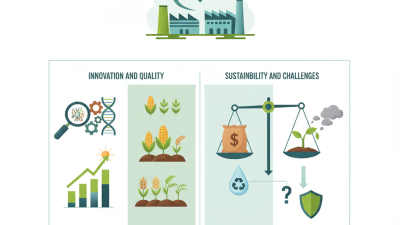
Understanding which companies stand out is essential for farmers and agronomists alike. The top fertilizer manufacturers have a reputation for quality and innovation. They invest in research and development to create advanced products. However, it is also vital to remain vigilant. Some manufacturers may prioritize profit over sustainability. This reality poses a challenge for responsible sourcing.
Analyzing the market can reveal various players in the fertilizer industry. Each has unique strengths and weaknesses. Thus, recognizing these differences aids in making informed decisions. Ultimately, the future of agriculture depends on finding reliable partners in fertilizer manufacturing.
Overview of the Global Fertilizer Market and Key Players
The global fertilizer market plays a crucial role in modern agriculture. With the increasing demand for food, fertilizers have become vital for boosting crop yields. Farmers rely heavily on these products to enhance soil quality and improve plant nutrition. However, the market faces various challenges, including price volatility and environmental concerns.
Numerous key players shape this landscape, contributing to advancements and innovations. They emphasize sustainable practices alongside improving efficiency. Technologies like precision farming have gained traction. These practices seek to minimize waste and environmental impact. Yet, the industry must continue addressing potential drawbacks, such as the overuse of chemical fertilizers, which can harm ecosystems.
Global trends indicate a shift towards organic options. Many farmers are exploring alternatives to synthetic fertilizers. However, barriers remain. Access to these organic solutions can be limited in some regions. Ultimately, an ongoing evaluation of manufacturing practices and environmental impacts is essential for the industry's future growth.
Top Nitrogen Fertilizer Manufacturers and Their Market Shares
In the world of agriculture, nitrogen fertilizers play a crucial role. They provide essential nutrients that enhance crop growth. Understanding market dynamics is key for stakeholders in this sector. Several manufacturers lead the market, each offering unique products and solutions. This landscape is constantly evolving, influenced by demand and innovation.
Many top nitrogen fertilizer manufacturers hold significant market shares. They utilize advanced technologies to produce quality products. Their research and development efforts drive improvements in efficiency and effectiveness. However, competition remains fierce. Smaller players often introduce new methods that challenge the status quo.
An important consideration is sustainability. As environmental regulations increase, manufacturers face pressure to reduce their carbon footprints. Some are making strides, while others lag behind. This creates a complex scenario, prompting all manufacturers to reassess their practices. The ultimate goal is to balance production needs with ecological responsibility. The market will continue to shift as brands grapple with these challenges.
Leading Phosphate Fertilizer Producers and Production Statistics
Phosphate fertilizers play a crucial role in global agriculture. They supply essential nutrients to crops, enhancing growth and yield. Several leading producers dominate the market, each with significant production capacities.
Statistics reveal that phosphate fertilizers contribute to a substantial portion of total nutrient consumption worldwide. These fertilizers help farmers boost soil quality and plant health.
Despite advancements, challenges exist within the phosphate fertilizer industry. For instance, the environmental impact of mining and production processes raises concerns. Sustainable practices are increasingly necessary to mitigate these issues. The industry's reliance on non-renewable resources also prompts ongoing discussions about long-term viability. Some producers are exploring alternative materials, but this transition is still in the early stages.
Market dynamics fluctuate, influenced by demand and regulatory changes. Producers must remain adaptable to maintain their positions. As the agricultural landscape evolves, new technologies and approaches may reshape phosphate fertilizer production. This industry facet highlights the need for continuous innovation and more sustainable solutions. Understanding these aspects is vital for stakeholders aiming to thrive in the changing market.
Emerging Potash Manufacturers and Trends in Supply Chain
The supply chain for potash is evolving, reflecting new trends and emerging manufacturers. Potash is a vital nutrient for crops, essential for enhancing yield and quality. Recently, several new players have entered the market, aiming to meet the rising global demand. They focus on sustainable practices to minimize environmental impact.
One notable trend is the shift towards localization. This approach reduces transportation costs and carbon footprints. Manufacturers are establishing processing plants closer to mining sites or agricultural hubs. This not only supports local economies but also improves supply chain efficiency. Innovations in extraction methods are enhancing potash production rates.
However, challenges persist. Fluctuations in global demand and regulations can disrupt supply chains. Manufacturers must adapt quickly to these changes. Additionally, competition among producers is intensifying. Some firms may yield to pressure, overlooking quality standards in a rush to increase output. This raises concerns about the long-term viability of certain practices.
Top Fertilizer Manufacturers You Should Know About - Emerging Potash Manufacturers and Trends in Supply Chain
| Country |
Annual Production (Million Tons) |
Market Share (%) |
Emerging Trends |
| Canada |
8.5 |
25% |
Increased focus on sustainable practices |
| United States |
13.2 |
30% |
Technological advancements in nutrient efficiency |
| Brazil |
6.0 |
15% |
Shift towards organic fertilizers |
| Russia |
9.0 |
20% |
Expansion of potash reserves and production |
| China |
10.5 |
10% |
Increase in precision agriculture |
Impact of Fertilizer Industry on Agriculture and Food Security
Fertilizers are crucial to modern agriculture. They enhance soil fertility and promote crop growth. This is particularly important in a world facing food security challenges. The increasing global population demands more agricultural output. Fertilizers help farmers achieve higher yields. However, their use must be managed carefully to avoid environmental harm.
The overuse of fertilizers can lead to soil degradation and water pollution. Farmers often apply more than necessary, thinking it will boost productivity. This approach can backfire, affecting not only crops but also ecosystems. Sustainable practices are essential. Controlled application and organic alternatives can minimize negative effects. The goal should be to maintain soil health while ensuring food security.
Education and awareness are vital in the fertilizer industry. Farmers need guidance on optimal usage. Research into innovative fertilizers is ongoing. These innovations may enhance efficiency while reducing environmental impact. As we navigate these issues, collaboration between industry experts and farmers is critical. The future of food security relies on responsible fertilizer practices.