Top 10 Urea Suppliers: Key Factors to Consider for Your Sourcing Needs
In the vast landscape of agricultural and industrial chemicals, urea plays a pivotal role as a nitrogen-rich fertilizer and a crucial component in several manufacturing processes. As the demand for urea continues to rise, sourcing from reliable urea suppliers becomes essential for businesses aiming to maintain productivity and meet market needs. Selecting the right supplier involves crucial considerations that can significantly impact the price, quality, and consistency of the product.
When evaluating urea suppliers, it's important to assess various factors such as production capacity, supply chain reliability, and pricing strategies. Additionally, the geographical location of suppliers can affect shipping times and costs, making it imperative to choose a partner that aligns with your operational needs. By carefully analyzing these aspects, businesses can ensure that they remain competitive in a market that is increasingly reliant on high-quality urea.
This article presents a comprehensive overview of the top 10 urea suppliers in the market, detailing key insights and factors to consider when making your sourcing decisions. Whether you are a large-scale agricultural producer or a manufacturer with specific needs, understanding the landscape of urea suppliers is vital in securing a sustainable supply chain tailored to your requirements.

Understanding Urea: An Overview of Its Importance in Agriculture
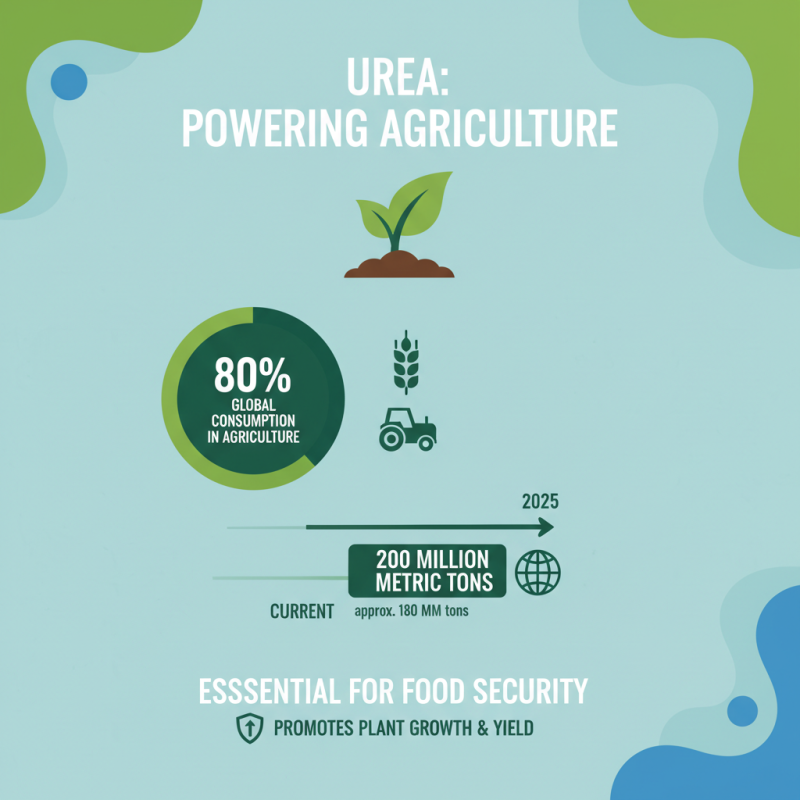
Urea is a crucial nitrogenous fertilizer widely used in agriculture due to its high nitrogen content and effectiveness in promoting plant growth. According to the Food and Agriculture Organization (FAO), over 80% of global urea consumption is attributed to the agricultural sector. With agricultural productivity being a significant driver of food security, understanding the role of urea is essential for farmers and agribusinesses alike. As the global population continues to grow, the demand for urea is projected to rise, with production expected to reach approximately 200 million metric tons by 2025.
Moreover, urea plays a critical role in improving crop yields by facilitating the synthesis of proteins and supporting various metabolic processes in plants. A study published in the Journal of Agricultural Science highlights that urea application can increase crop yields by 20-30%, depending on specific soil conditions and crop types. This increase is vital as farmers strive to meet the rising food demand while coping with challenges such as climate change and soil nutrient depletion. Thus, sourcing high-quality urea becomes imperative, not only for maximizing productivity but also for ensuring sustainable agricultural practices that protect the environment and maintain soil health.
Global Urea Market Trends: Consumption and Production Statistics
In the dynamic landscape of the global urea market, understanding consumption and production statistics plays a crucial role for businesses involved in sourcing. As one of the most widely used nitrogen fertilizers, urea's demand is driven by agricultural practices, particularly in regions with high crop output. Recent trends indicate that emerging economies are experiencing a surge in urea consumption, primarily due to increasing food production needs to support growing populations.
Tip: When evaluating potential suppliers, consider their production capacity and how it aligns with your sourcing requirements. Analyzing suppliers’ production facilities can provide insight into their ability to meet your demands consistently.
Moreover, the production of urea is influenced by various factors, including raw material availability, technological advancements, and environmental regulations. Key producing countries are focusing on enhancing their production methods to minimize environmental impact while maximizing output. Understanding these factors can help businesses identify reliable suppliers who can deliver quality products at competitive prices.
Tip: Look for suppliers who demonstrate a commitment to sustainable practices and technological innovations, as these attributes can lead to more reliable and efficient supply chains.
Evaluating Top Urea Suppliers: Key Criteria for Selection
When evaluating top urea suppliers, several key criteria should guide your selection process. Primarily, the supplier's production capacity and reliability play a critical role. According to a recent report by Grand View Research, the global urea market is projected to reach a valuation of approximately $200 billion by 2027, reflecting an increasing demand for urea in both agricultural and industrial applications. Suppliers with larger production facilities and advanced technologies can better meet fluctuating demand and provide a consistent supply, which can help mitigate risks associated with supply chain disruptions.
Another vital consideration is the geographic location of the supplier and their logistics capabilities. A study by Mordor Intelligence highlights that the North American region is expected to dominate the urea market due to its robust agriculture sector. Suppliers based in strategic locations can provide cost-effective shipping options and quicker delivery times, thus ensuring a more efficient procurement process. Furthermore, assessing the supplier's compliance with environmental regulations and sustainability practices has become increasingly important, as the industry faces growing pressure to adopt greener practices. Suppliers that demonstrate a commitment to sustainability can not only enhance your brand's reputation but may also provide long-term cost savings through improved efficiency.
Top 10 Urea Suppliers: Key Factors to Consider for Your Sourcing Needs
| Supplier Criteria |
Rating (Out of 5) |
Delivery Time (Days) |
Price per Ton (USD) |
Sustainability Practices |
| Quality of Urea |
4.5 |
14 |
300 |
Yes |
| Customer Support |
4.0 |
10 |
320 |
No |
| Production Capacity |
4.7 |
12 |
290 |
Yes |
| Compliance With Standards |
4.8 |
15 |
310 |
Yes |
| Market Reputation |
4.6 |
11 |
305 |
No |
| Flexibility in Order Size |
4.2 |
13 |
295 |
Yes |
| Innovation in Production |
4.4 |
16 |
315 |
Yes |
| Logistics and Distribution |
4.3 |
9 |
285 |
No |
| Global Reach |
4.6 |
17 |
300 |
Yes |
Regional Analysis: Dominant Urea Suppliers and Market Shares
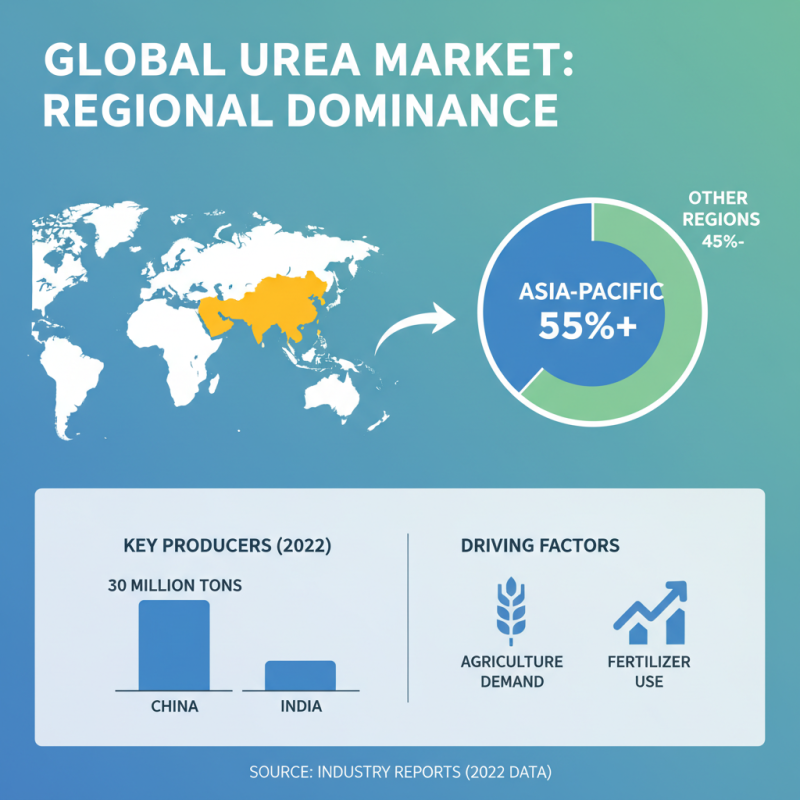
When evaluating the urea supply landscape, it is essential to examine regional dynamics that significantly influence market shares. According to recent industry reports, the Asia-Pacific region dominates the global urea market, accounting for over 55% of total production. Countries such as China and India are key players in this market, primarily due to their extensive agricultural sectors and rising fertilizer demand. In 2022, China produced approximately 30 million tons of urea, further solidifying its position as a leading supplier globally.
In North America, the urea market showcases a different trend, where biofuel production and agricultural practices reshape demand. The United States holds approximately 20% of the North American market and has implemented strategies to optimize fertilizer utilization. Reports indicate that the urea consumption in North America is projected to grow at a compound annual growth rate (CAGR) of around 3% through 2027, reflecting the rising need for efficient fertilizers to meet agricultural needs. Meanwhile, Europe maintains a steady demand, driven by environmental regulations that encourage sustainable farming practices. Understanding these regional nuances will aid businesses in making informed decisions when sourcing urea to fulfill their agricultural and industrial requirements.
Future of Urea Sourcing: Innovations and Sustainability Practices
As the demand for urea continues to rise, the sourcing landscape is evolving with a strong focus on innovations and sustainability practices. Suppliers are actively seeking ways to enhance production efficiency while minimizing their environmental impact. Technological advancements, such as the implementation of advanced manufacturing processes and digitalization, are playing a crucial role in optimizing urea production. These innovations not only improve yield but also reduce energy consumption and greenhouse gas emissions, catering to the increasing regulatory requirements and consumer preferences for sustainable products.
Furthermore, sustainability practices are becoming integral to urea sourcing strategies. Many suppliers are now adopting circular economy principles, encouraging the recycling of nitrogenous waste and utilizing by-products from agricultural processes. This approach not only secures a more sustainable source of raw materials but also aligns with global shifts towards environmentally responsible practices. Companies are increasingly publishing sustainability reports, committing to carbon neutrality, and engaging in partnerships that promote eco-friendly initiatives. By prioritizing these innovative and sustainable practices, suppliers can not only meet current market demands but also pave the way for a more sustainable future in urea sourcing.