How to Use Water Soluble Fertilizers for Maximum Plant Growth and Yield
Water-soluble fertilizers are essential tools for gardeners and farmers alike, designed to optimize plant growth and enhance yields. These fertilizers dissolve easily in water, making them particularly convenient for application through irrigation systems or as foliar sprays. The rapid absorption of nutrients allows plants to take up essential elements almost immediately, promoting vigorous growth and abundant flowering or fruiting phases.
Understanding how to effectively utilize water-soluble fertilizers is crucial for anyone seeking to maximize their gardening or agricultural success. By tailoring nutrient applications based on specific crop needs, soil conditions, and growth stages, growers can significantly improve their plants' health and productivity. In this guide, we will explore best practices for using water-soluble fertilizers, including application rates, timing, and methods, ensuring that both novice and experienced cultivators can achieve optimal results in their endeavors. Through proper use, water-soluble fertilizers can transform not just the health of individual plants, but the overall yield of entire growing operations.

Understanding Water Soluble Fertilizers and Their Benefits
Water soluble fertilizers are essential tools for gardeners and farmers alike, promoting maximum plant growth and enhancing overall yield. These fertilizers dissolve easily in water, allowing for quick absorption by plants. The primary benefit of using water soluble fertilizers is their ability to deliver nutrients directly to the root zone, ensuring that plants receive the necessary elements like nitrogen, phosphorus, and potassium precisely when they need them. This targeted approach not only supports healthier plant development but also improves nutrient efficiency, reducing wastage and environmental impact.
When utilizing water soluble fertilizers, consider the following tips for optimal results. First, always check the specific nutrient requirements of your plants, as different species have varying needs. This will help you choose the right formulation and avoid over-fertilization, which can harm plant health. Secondly, water your plants before applying the fertilizer. This practice ensures that the roots are hydrated and can effectively absorb the nutrients without experiencing stress.
Additionally, incorporating water soluble fertilizers during key growth stages, such as flowering or fruiting, can lead to remarkable improvements in yield. Timing is crucial; applying these fertilizers early in the morning or late in the afternoon minimizes evaporation and maximizes absorption. Monitoring your plants regularly will also inform you of any deficiencies or excesses, allowing for timely adjustments to your fertilization strategy.
Impact of Water Soluble Fertilizers on Plant Growth and Yield
This chart illustrates the average yield per plant for different types of water soluble fertilizers. The data indicates that N-P-K 20-20-20 produces the highest yield, showcasing the effectiveness of balanced nutrient formulas in promoting plant growth.
Choosing the Right Type of Water Soluble Fertilizer for Your Plants
When selecting the right type of water soluble fertilizer for your plants, it's essential to consider the specific nutrient requirements based on plant type and growth stage. For instance, a study from the
International Fertilizer Industry Association indicates that
nitrogen (N),
phosphorus (P), and
potassium (K)
are crucial macronutrients that plants require in varying ratios. For leafy greens, a higher nitrogen ratio is beneficial, while fruiting plants may thrive with a balanced NPK ratio to support bloom and fruit development.
Tips: Always check the NPK ratio on the fertilizer label and match it to your plant's growth phase. For example, during the vegetative stage, opt for fertilizers with higher nitrogen content, while during flowering, choose those with higher phosphorus levels to enhance blooming.
Additionally, consider the calcium and magnesium content in your selected fertilizers. A report by the
American Society of Horticultural Science emphasizes that these secondary nutrients play a vital role in overall plant health and yield. Using water soluble fertilizers that are rich in calcium can improve cell wall structure in plants, leading to better fruit quality and disease resistance.
Tips: Regularly test your soil to determine nutrient deficiencies, and adjust your fertilizer choice accordingly. Combining water soluble fertilizers with organic matter can also boost nutrient uptake and enhance soil health. By selecting the right formulation, you can maximize your plants' growth and yield potential effectively.
Determining the Correct Application Rate for Effective Usage
When using water-soluble fertilizers, determining the correct application rate is crucial for achieving optimal plant growth and yield. Each type of plant has distinct nutritional needs, which can vary according to growth stage, species, and environmental conditions. Therefore, it is essential to conduct soil tests to assess nutrient deficiencies and choose a fertilizer that complements the existing soil profile. Generally, following the recommended application rates provided by agronomic resources or agricultural extensions can provide a solid starting point.
One effective approach to application is to begin with a diluted solution, targeting a lower concentration than what is suggested. This method allows for gradual acclimatization, helping the plants to absorb nutrients more efficiently while minimizing the risk of fertilizer burn. Monitoring plants for signs of nutrient deficiency or excess can guide adjustments to the application rate. Regular observations and adjustments based on plant responses can dramatically improve overall health and yield, ensuring that the plants receive the precise nutrients they require for robust growth.
How to Use Water Soluble Fertilizers for Maximum Plant Growth and Yield - Determining the Correct Application Rate for Effective Usage
| Fertilizer Type |
Nitrogen (N) % |
Phosphorus (P) % |
Potassium (K) % |
Recommended Application Rate (g/L) |
Optimal Usage Frequency (per week) |
| General Purpose |
20 |
20 |
20 |
5 |
1-2 |
| Bloom Booster |
10 |
30 |
10 |
3 |
1 |
| Vegetative Growth |
30 |
10 |
30 |
4 |
2 |
| Root Development |
15 |
15 |
25 |
6 |
1-2 |
Optimal Techniques for Water Soluble Fertilizer Application
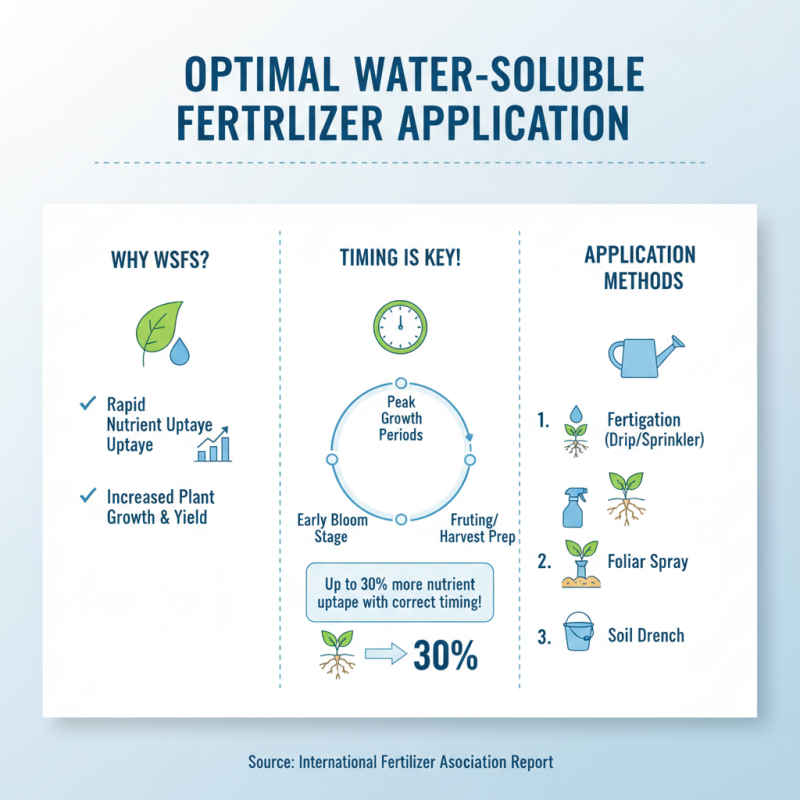
Water-soluble fertilizers (WSFs) play a crucial role in enhancing plant growth and maximizing yield, given their ability to provide plants with essential nutrients quickly and efficiently. For optimal application, it is imperative to fully understand the timing and method of application. According to a report by the International Fertilizer Association, the correct application timing can increase nutrient uptake by as much as 30%. This practice is essential particularly during peak growth periods when plants demand higher nutrient availability.
One effective technique for WSF application is the use of fertigation, a method that combines fertilization with irrigation. A study published in the Journal of Agricultural Science highlighted that using fertigation can increase crop yields by 10-20% compared to traditional granular fertilizers. This technique allows for more precise control over nutrient concentrations and can significantly reduce nutrient leaching, ensuring that more of the fertilizer reaches the plant roots. Additionally, maintaining the appropriate pH and electrical conductivity (EC) levels in the solution is vital. Research indicates that an EC range of 1.5-2.5 mS/cm is optimal for most crops, promoting better nutrient absorption.
Incorporating foliar applications can also enhance the effectiveness of WSF. This method allows for the direct absorption of nutrients through the leaves, which can be particularly beneficial when soil conditions limit root nutrient uptake. A comprehensive review by the American Society for Horticultural Science noted that foliar feeding can boost nutrient assimilation by 15-25%, especially in fruit and vegetable crops. Using these optimal techniques not only ensures efficient use of water-soluble fertilizers but also promotes healthier plants and higher agricultural yields.
Timing Your Fertilizer Applications for Maximum Growth Impact
Timing your fertilizer applications is crucial for maximizing plant growth and yield, as it directly influences nutrient availability and uptake by the plants. Research indicates that synchronizing fertilizer application with key growth stages of plants can significantly enhance nutrient efficiency. For example, a study conducted by the Agricultural Research Service found that applying water-soluble fertilizers at the onset of rapid growth periods, such as during flowering or fruit development, led to yield increases of nearly 20% compared to conventional timing. This underscores the importance of understanding not only the nutrient needs of your plants but also the timing of those needs.
Moreover, studies show that certain crops respond optimally to fertilizer applications at specific intervals. For instance, a meta-analysis published in the Journal of Agronomy revealed that split applications of water-soluble fertilizers during critical growth stages resulted in a 15-30% boost in overall yields. Timing fertilizer applications to align with moisture availability, particularly in regions that experience varying rainfall patterns, can also enhance nutrient uptake and reduce the risk of leaching. By concentrating your efforts on the growth phases that demand the most nutrients, you can ensure that your plants are primed for success throughout their growth cycle.