
2026 Top Urea Suppliers for Global Buyers
Choosing reliable urea suppliers requires more than comparing the lowest quoted price. Global buyers must examine production capacity, product consistency, export experience, delivery routes, and documentation.
Fertilizer market analyst Chris Lawson offers a useful perspective: “Urea markets are global, but supply decisions remain deeply regional.” This view matters when seasonal demand rises in Brazil, India, Southeast Asia, or Europe. A supplier near a major port may reduce inland costs. However, port access does not guarantee dependable delivery. Vessel shortages, weather delays, and changing trade policies can quickly affect schedules.
This guide introduces leading urea suppliers for 2026 and explains how buyers can assess them with greater confidence. Each supplier should be reviewed through verifiable evidence, including technical specifications, recent shipment records, quality certificates, and responsive customer support. Granule size, nitrogen content, moisture levels, and packaging strength can influence storage performance and field application. Small details matter.
No supplier ranking is perfect. Market data changes. Public information may also be incomplete or outdated. Buyers should confirm current capacity, pricing terms, payment conditions, and delivery commitments directly with each company. That extra step can feel slow, but it may prevent costly surprises.
The strongest urea suppliers combine stable manufacturing with transparent communication. They understand regional requirements and provide practical logistics solutions. This overview is designed to help procurement teams compare options carefully, identify suitable partners, and make decisions based on evidence rather than promotional claims.

Urea Suppliers: Market Role, Product Types, and Global Demand
2026 Top Urea Suppliers for Global Buyers
Urea suppliers play a practical role in modern agriculture and industrial supply chains. They connect nitrogen production with farms, distributors, and manufacturing users across regions. Global buyers usually assess more than price. They examine production capacity, export experience, delivery consistency, and documentation quality.
Urea is available in several forms. Granular urea suits large-scale field spreading and mechanical application. Prilled urea dissolves quickly and supports various fertilizer blending processes. Technical-grade material may serve industrial needs, where purity and particle control matter. Buyers should check nitrogen content, biuret level, moisture, particle size, and packaging details before signing contracts.
Demand remains uneven. Large farming regions may increase purchases before planting seasons, while industrial demand can shift with energy costs and manufacturing activity. Experienced procurement teams compare port access, loading schedules, storage conditions, and shipment insurance. A clear certificate of analysis helps, but it does not replace independent inspection. Small discrepancies can affect handling and field performance.
Reliable suppliers communicate early when production or shipping changes occur. This matters during peak seasons. However, no supplier can guarantee perfect timing or stable prices every year. Forecasts often miss weather events, freight disruptions, or sudden policy changes. Buyers should keep alternative supply options and review historical delivery records. A careful supplier assessment remains necessary, even when a low quotation looks attractive.
| Category | Supplier Region or Market Group | Typical Product Types | Key Product Data | Market Role | Main Demand Destinations | 2026 Buying Considerations |
|---|---|---|---|---|---|---|
| Global benchmark | International urea market | Prilled ureaGranular ureaTechnical urea | 46.0% nitrogen; fertilizer grade is commonly traded as 46-0-0. Global installed capacity is generally estimated at more than 220 million metric tonnes per year, while annual fertilizer demand is typically below total capacity. | Highly traded nitrogen fertilizer with prices influenced by natural gas, coal, freight, crop economics, weather, and export policy. | Major agricultural regions across Asia, Latin America, North America, Europe, and Africa. | Compare delivered cost, nitrogen content, granule strength, biuret level, moisture, and loading terms rather than headline price alone. |
| Export-oriented supply | Middle East | GranularPrilledBulk cargo | Large-scale gas-based production; products commonly meet agricultural-grade specifications with approximately 46% nitrogen. | Consistent seaborne supply position with access to the Indian Ocean, Mediterranean, Red Sea, and Asian markets. | South Asia, Southeast Asia, East Africa, Latin America, and Mediterranean markets. | Check vessel availability, canal and port routing, loading windows, and the effect of regional gas-price changes on offers. |
| Export-oriented supply | North Africa | GranularPrilled | Predominantly agricultural-grade urea; particle-size distribution and crushing resistance vary by plant and production line. | Important supplier to Europe, Latin America, Africa, and selected Asian destinations. | Europe, Brazil and other Latin American markets, West Africa, and the Mediterranean basin. | Evaluate regional freight advantages, customs requirements, port congestion, and product compatibility with local blending systems. |
| Large production base | China | PrilledGranularIndustrial grade | Production uses both coal-based and gas-based routes. Fertilizer-grade material is generally 46% nitrogen; export availability can change with domestic supply policy. | One of the world's largest production and consumption markets; a significant potential exporter when domestic conditions permit. | Domestic agriculture, Southeast Asia, South Asia, and other price-sensitive markets when exports are available. | Confirm export eligibility, inspection rules, allocation policies, minimum order quantities, and shipment timing before contracting. |
| Large production base | Russia and the wider Black Sea region | GranularPrilled | Large gas-based production base; commercial specifications commonly include about 46% nitrogen, with quality and logistics depending on origin. | Historically important export source with strong influence on European, Latin American, and global seaborne pricing. | Latin America, Africa, Asia, Türkiye, and other markets able to manage trade-compliance requirements. | Screen sanctions, insurance, banking, vessel routing, port access, and applicable import restrictions before purchase. |
| Regional supply | North America | GranularPrilledIndustrial grade | Domestic output is supported by natural-gas-based plants; granular material is widely used for mechanized field application. | Large regional consumer and producer market, with imports supplementing domestic supply during seasonal or logistical tightness. | United States, Canada, Mexico, and nearby agricultural markets. | Compare domestic inland transportation, rail availability, terminal storage, seasonal demand, and import parity. |
| Import-dependent demand | South Asia | PrilledGranular | One of the world's largest urea-consuming regions; demand is concentrated in rice, wheat, maize, sugarcane, and other intensive crops. | Major global import demand center, with purchases often affected by government tenders, subsidies, and domestic production gaps. | India, Pakistan, Bangladesh, Nepal, and neighboring markets. | Monitor tender calendars, import duties, subsidy changes, port drafts, bagging requirements, and monsoon-related logistics. |
| High-growth demand | Latin America | GranularBulkBagged | Strong demand from large-scale soybean, maize, sugarcane, wheat, and pasture production; granular urea is preferred for broad-acre application. | One of the most important seaborne import regions, with demand linked to crop prices, planting acreage, and currency conditions. | Brazil, Argentina, Mexico, Colombia, and other agricultural economies. | Assess port-to-farm freight, inland storage, exchange-rate exposure, seasonal procurement, and bulk-versus-bagged economics. |
| Industrial application | Technical and industrial urea | Resin productionAdhesivesChemical processing | Typically supplied at higher purity than fertilizer grade; exact limits for moisture, biuret, aldehydes, insolubles, and trace metals depend on the application. | Used as a chemical intermediate and process input rather than as a field-applied fertilizer. | Wood panels, coatings, adhesives, chemical manufacturing, and specialty formulation industries. | Request a current certificate of analysis, traceability documents, packaging details, and application-specific impurity limits. |
| Transport emissions control | High-purity automotive urea solution | 32.5% urea solutionISO 22241 compliant | A solution of 32.5% high-purity urea in deionized water, used in selective catalytic reduction systems for diesel vehicles and equipment. | Specialty demand segment requiring strict quality control; contamination can damage dosing systems and catalysts. | Road transport, mining, construction equipment, marine engines, and stationary diesel applications. | Verify ISO 22241 conformity, density, alkalinity, biuret, aldehydes, insoluble matter, storage temperature, and contamination controls. |
| Common fertilizer grade | Prilled urea | Small spherical particles46-0-0 | Common particle diameter is approximately 1–3 mm, although the exact range varies by producer. Usually dissolves rapidly after application. | Widely used in agriculture, blending, solution preparation, and smaller-scale distribution. | Rice, wheat, maize, horticulture, plantation crops, and general farm retail channels. | Check crush strength, caking tendency, moisture, biuret, particle-size distribution, and suitability for blending or spreading. |
| Common fertilizer grade | Granular urea | Large particles46-0-0 | Common particle diameter is approximately 2–4 mm, with higher mechanical strength and improved handling for bulk spreading. | Preferred for mechanized application, bulk shipment, blending, and long-distance agricultural distribution. | Large commercial farms and fertilizer import terminals in Latin America, North America, Europe, Asia, and Africa. | Compare granule size, crushing resistance, dust level, caking behavior, spreader pattern, and storage performance. |
| Demand outlook | Global agricultural demand | Field cropsRice and wheatMaize | Demand remains structurally supported by population growth, crop intensification, and nitrogen replacement needs, while application rates are increasingly influenced by efficiency policies. | Largest end-use segment for urea worldwide. | Asia remains the largest consumption center; Latin America, North America, Africa, and Europe remain important regional markets. | 2026 procurement should consider crop margins, nitrogen-use-efficiency programs, weather, fertilizer affordability, and possible export restrictions. |
| Logistics benchmark | Global buyer procurement route | FOBCFRCIFBulk or bagged | Delivered cost includes product price, ocean freight, insurance, port handling, inspection, inland transport, storage, and financing. | Trade economics can change significantly between supplier regions even when fertilizer-grade specifications are similar. | Import terminals, fertilizer blenders, distributors, cooperatives, and large farms. | Use a landed-cost model and define Incoterms, inspection point, acceptable quality variance, demurrage responsibility, packing, and claim procedures. |
Related Posts
-
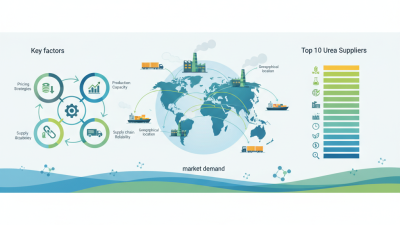
Top 10 Urea Suppliers: Key Factors to Consider for Your Sourcing Needs
-

Who Are the Best Urea Suppliers in China?
-

Why Choose Urea Suppliers for Global Buyers?
-

How to Buy Fertilizer Online from Top China Suppliers?
-
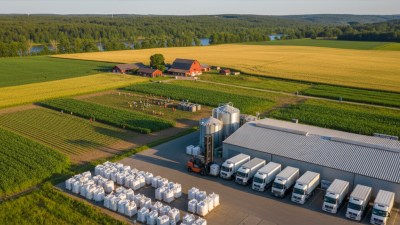
Why Choose Wholesale Fertilizer Distributors for Your Business?
-
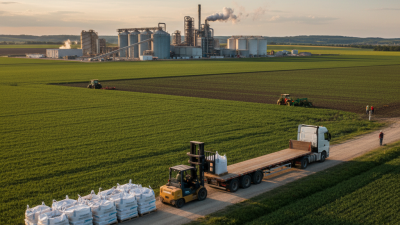
What is the Role of Wholesale Fertilizer Suppliers?