China Best Organic Fertilizer Production Line Supplier
Choosing a China-based supplier for an organic fertilizer production line requires more than comparing prices. It requires practical judgment. A reliable manufacturer should understand composting, fermentation, granulation, drying, screening, coating, and packaging as one connected process. Each stage affects product quality. Moisture control matters. So does temperature.
Experienced suppliers can recommend equipment according to raw materials, expected capacity, local climate, and finished fertilizer requirements. Poultry manure, livestock waste, crop residues, and composted materials behave differently inside the line. A thoughtful supplier should explain these differences clearly. They should also provide process diagrams, equipment specifications, installation guidance, and operating instructions. Transparent communication builds confidence.
Real projects reveal important details. A granulator may perform differently when feed moisture changes. A dryer may need extra attention during humid seasons. Dust collection, noise control, energy use, and maintenance access should be discussed before production begins. Small oversights can become expensive later. That lesson matters.
A professional China supplier should support testing, commissioning, spare-parts planning, and operator training. References, factory inspections, quality records, and compliance documents can help buyers evaluate reliability. However, no production line is perfect for every business. The best solution must be adjusted after reviewing material tests and site conditions.
Good engineering remains flexible. A responsible supplier will not promise unrealistic output or hide technical limitations. Instead, they will explain assumptions, risks, and possible improvements. This approach supports stable organic fertilizer production and helps customers build a safer, cleaner, and more efficient operation. Mistakes may still occur. Careful review reduces them.
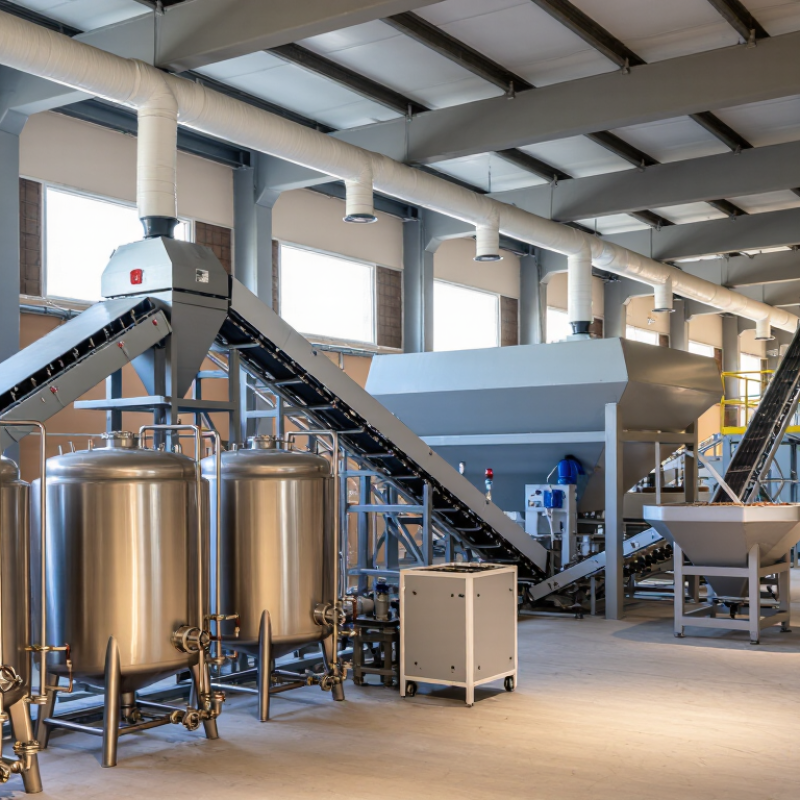
Organic Fertilizer Feedstock Selection: Target a C/N Ratio of 25–30:1
For a reliable organic fertilizer production line, begin with the carbon-to-nitrogen ratio. A practical target is 25–30:1. This range supports active composting and steady heat generation. Fresh poultry manure often supplies abundant nitrogen. Straw, rice husks, sawdust, and dry leaves add carbon. Food residues vary widely, so visual judgment alone can mislead. Weigh each material separately and test moisture before mixing. Good records matter.
If the mixture contains too much carbon, decomposition becomes slow and uneven. Excess nitrogen may create a strong ammonia odor. It can also cause nutrient loss. Adjust the blend with dry plant material or nitrogen-rich manure. Keep moisture similar to a squeezed sponge. In a production line, shredders and mixers should reduce large pieces before fermentation. Smaller particles improve contact, but overly fine material may restrict airflow. A perfect laboratory ratio is not always practical on a farm. Real feedstock changes every season.
Tips: Keep a simple batch sheet for every production run. Record material weight, moisture, odor, and temperature. Check the pile after mixing, not only before it. Use a carbon-rich bulking material when the blend feels wet and sticky. Do not trust color alone. Retest when the temperature stops rising.
Organic fertilizer feedstocks should be blended toward a carbon-to-nitrogen ratio of 25–30:1 for effective composting. Representative values show that manure is often nitrogen-rich, while straw and sawdust are carbon-rich. Actual ratios vary with moisture, maturity, and material source.
Data shown are representative literature-based C/N ratios; the target midpoint is 27.5:1.
Aerobic Composting Control: Maintain 55–65°C for Effective Sanitization
China Best Organic Fertilizer Production Line Supplier
Aerobic composting depends on controlled heat, oxygen, and moisture. Keep the active pile between 55 and 65°C for reliable pathogen reduction. The U.S. Department of Agriculture requires compost used in organic production to reach 55–77°C. It also specifies three days for static piles, or 15 days with five turnings for windrows (USDA National Organic Program, 7 CFR 205.203).
Heat is uneven. A single probe cannot represent the whole batch. Use several calibrated sensors across the center, edges, and lower layers. Record readings at least twice daily during the active phase. The U.S. Environmental Protection Agency identifies temperature, moisture, oxygen, and turning as core controls in effective composting systems (U.S. EPA, Composting and Mulching guidance).
A practical production line should adjust aeration when temperatures rise too quickly. Excess heat can slow microbial activity and dry the outer material. Moisture near 50–60% usually supports active decomposition, but feedstock texture changes this balance. I would not trust temperature alone. A pile may show 60°C while its corners remain cool. Operators should inspect odors, moisture, structure, and curing maturity before granulation. Small sampling errors remain possible, so records need review rather than blind acceptance.
Material Crushing and Mixing: Achieve Uniform Nutrient Distribution
China Best Organic Fertilizer Production Line Supplier
Material Crushing and Mixing: Achieve Uniform Nutrient Distribution
Organic fertilizer quality begins with controlled material preparation. Raw materials may include manure, compost, crop residues, and mineral additives. Their moisture and fiber content can vary significantly. A suitable crusher reduces oversized pieces without producing excessive dust. This improves feeding stability and protects downstream equipment.
The mixing stage must distribute nutrients throughout every batch. A horizontal or vertical mixer can work well when its design matches the material. Mixing time, fill level, blade shape, and moisture all require careful adjustment. Operators should check samples from several points in the batch. Laboratory testing can confirm nitrogen, phosphorus, potassium, and moisture consistency.
Small details matter. Keep the crusher screen clean. Avoid overfilling the mixer. Monitor motor current for unusual changes. These practices help reduce dead zones and uneven blending. However, no production line performs perfectly under every condition. I have seen acceptable formulas become inconsistent after seasonal moisture changes. Regular calibration and process records are necessary. Sometimes, a slower mixing cycle produces better results than higher speed. That may reduce output, but it can improve nutrient uniformity and pellet performance. A dependable supplier should evaluate the formula, capacity, moisture range, and maintenance needs before recommending equipment.
Granulation, Drying, and Screening: Meet ≤20% Final Moisture Requirements
China Best Organic Fertilizer Production Line Supplier
Producing organic fertilizer with final moisture at or below 20% requires control across the entire line. Granulation begins with a stable blend of compost, animal manure, and moisture-adjusted organic materials. A pan or drum granulator forms particles with practical strength and consistent size. Too much liquid creates sticky lumps. Too little moisture causes weak granules and excessive dust.
Drying removes internal moisture, not just surface water. Hot air temperature, drum speed, airflow, and residence time must work together. Operators should check material temperature at the dryer outlet and test moisture with a calibrated meter. A sample may look dry while its center remains damp. That mistake can appear later during storage.
Screening separates qualified granules from fines and oversized pieces. Fines can return to granulation, while oversized particles may require crushing. This recycle loop improves yield, but it also changes the feed balance. Real production is rarely perfectly stable. Weather, raw material age, and compost structure can shift results. Regular sampling helps the supplier adjust airflow, feed rate, and drum speed before moisture exceeds 20%. A reliable production line should also allow cleaning access, safe maintenance, and clear process records. Small details matter.
Supplier Evaluation: Verify ≥45% Organic Matter and ≥5% Total NPK (NY/T 525-2021)
Choosing a China-based organic fertilizer production line supplier requires more than checking machinery photos. The product must meet the buyer’s quality target. Under NY/T 525-2021, verify at least 45% organic matter and 5% total NPK. Total NPK means nitrogen, phosphorus, and potassium together. These figures should appear in independent test reports, not only brochures. Ask for batch numbers, sampling dates, raw material records, and laboratory methods. Request samples from different production days. One bag proves little.
During a supplier visit, inspect the composting area, mixer, granulator, dryer, screener, and packing line. A reliable line should control residence time, temperature, moisture, and contamination risks. Operators should explain how organic matter is protected during drying. Excessive heat may reduce quality. Check calibration records for scales and nutrient dosing equipment. I once focused too much on output capacity and overlooked uneven mixing. The first laboratory sample passed, but later bags varied noticeably.
For stronger evidence, use a representative composite sample and an accredited laboratory. Compare laboratory results with the production formula and purchase specification. If total NPK reaches 5% only on paper, the supplier needs correction. A dependable manufacturer accepts retesting and keeps traceable records. Ask how rejected batches are isolated and reprocessed. Small details matter. Maybe the cheapest line is not the safest investment.
Related Posts
-
Top Fertilizer Companies Leading the Industry Today?
-
2026 Best Fertilizers to Buy Online for Global Farmers?
-
Top 10 Best Fertilizer Companies You Should Know?
-
10 Effective Tips for Using Green Fertilizer in Your Garden?
-

Who Are the Best Urea Suppliers in China?
-
2026 Best Organic Fertilizer Company for Sustainable Agriculture?