
China Top 10 Water Soluble Fertilizer Suppliers?
Choosing among China’s top water soluble fertilizer suppliers requires more than comparing prices and product photos. This guide introduces manufacturers through practical, evidence-based criteria. It considers formulation quality, raw material control, production capacity, export experience, and after-sales support. Product consistency matters in the field. A fertilizer may dissolve quickly in a glass beaker yet perform differently in irrigation equipment. That difference can affect crop uniformity, filter maintenance, and application costs.
The evaluation also reviews factory certifications, laboratory testing, packaging details, and customer feedback. Where available, it considers ISO systems, crop-specific data, technical sheets, and documented shipment experience. These sources offer stronger evidence than polished marketing claims. Still, no ranking is perfect. Supplier capabilities can change with new equipment, management decisions, or changing regulations. A company serving greenhouse growers may not suit large-scale grain production. Buyers should verify nutrient analysis, solubility, trace elements, compatibility, and minimum order quantities before signing contracts. Ask for a current sample.
This overview is designed for importers, distributors, growers, and agricultural professionals seeking reliable Chinese partners. It highlights what each supplier appears to do well, while noting possible limitations. That balance is important. The cheapest quotation may hide weaker packaging or inconsistent batches. The largest factory may provide less responsive technical guidance. Careful verification remains essential, especially when fertilizers will be applied through drip systems or fertigation equipment. Use this list as a starting point, not a final decision.
What Are Water-Soluble Fertilizers?
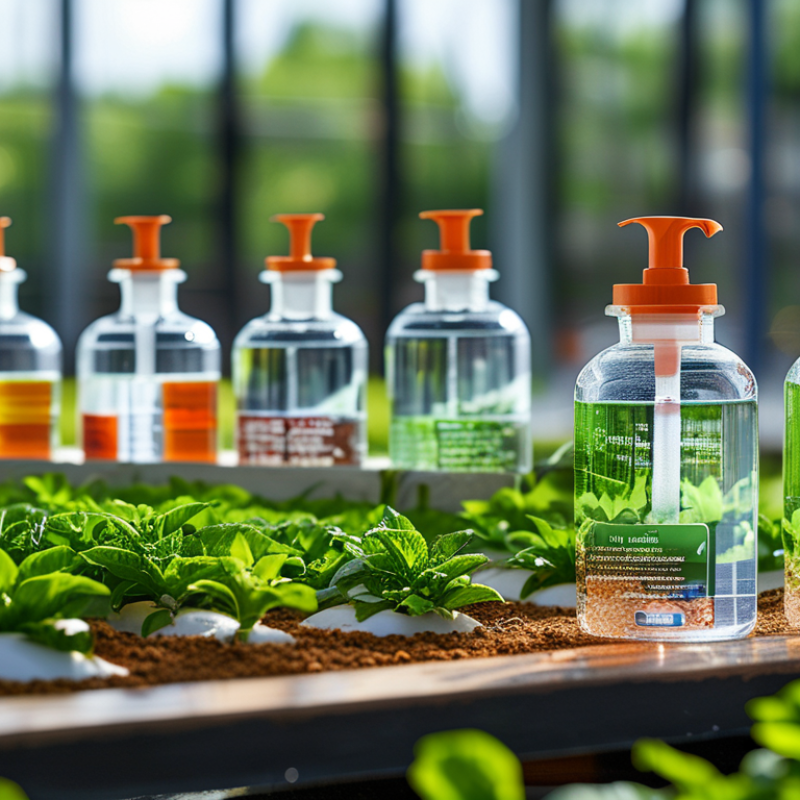
Water-soluble fertilizers are concentrated nutrient products designed to dissolve in water before application. They usually supply nitrogen, phosphorus, potassium, and selected micronutrients such as iron, zinc, or boron. Unlike many granular fertilizers, they can reach plant roots quickly through irrigation systems.
The simple definition is useful, but incomplete. A grower must also check solubility, nutrient ratios, water hardness, and solution pH. In a greenhouse, a measured solution may pass through drip lines and feed each plant near its root zone. This supports accurate dosing during different growth stages. Foliar spraying is another option, although leaf sensitivity and weather conditions require careful control.
Small errors matter.
Too much fertilizer can raise electrical conductivity and stress roots. Poor-quality water may cause deposits, clogged emitters, or unwanted reactions between nutrients. Calcium products, for example, should not be mixed carelessly with concentrated phosphate or sulfate solutions. Always follow the product label, prepare a small test batch, and inspect the solution for cloudiness or sediment. Field conditions can still challenge a perfect calculation. Uneven irrigation, changing temperatures, and weak drainage may reduce nutrient uptake. Water-soluble fertilizer is precise, but precision depends on testing, clean equipment, and regular observation of leaves, roots, and growing media.
China Top 10 Water Soluble Fertilizer Suppliers? - What Are Water-Soluble Fertilizers?
The table below presents ten widely traded water-soluble fertilizer categories and practical supplier-evaluation criteria. Product specifications may vary by manufacturing standard, grade, and formulation.
| No. | Water-Soluble Fertilizer Type | Typical Guaranteed Analysis | Solubility and Compatibility | Common Crop Applications | Key Supplier Evaluation Points |
|---|---|---|---|---|---|
| 1 | Urea | 46% nitrogen (N) | Highly water soluble; should not be mixed in concentrated solution with calcium nitrate or other calcium salts. | Field crops, vegetables, fruit trees, fertigation, and foliar programs at suitable concentrations. | Nitrogen assay, biuret content, particle uniformity, moisture level, and packaging quality. |
| 2 | Monoammonium Phosphate (MAP) | Commonly 12-61-0 N-P2O5-K2O | Water soluble and mildly acidic; generally suitable for many fertigation systems. | Root establishment, vegetables, cereals, fruit trees, and phosphorus-demanding growth stages. | Water-insoluble residue, phosphorus content, pH, heavy-metal limits, and batch consistency. |
| 3 | Monopotassium Phosphate (MKP) | Commonly 0-52-34 N-P2O5-K2O | Highly soluble and chloride-free; should be kept separate from concentrated calcium or magnesium solutions. | Flowering, fruit development, quality improvement, greenhouse crops, and foliar feeding. | Purity, clear-solution performance, phosphorus and potassium assay, and crystallization control. |
| 4 | Potassium Nitrate | Commonly 13-0-46 N-P2O5-K2O | Highly soluble and chloride-free; provides nitrate nitrogen and potassium. | Vegetables, berries, fruit trees, protected cultivation, and crops sensitive to chloride. | Nitrate and potassium assay, insoluble matter, chloride level, moisture, and storage stability. |
| 5 | Calcium Nitrate | Commonly about 15.5% total N and 19% calcium (Ca) | Highly soluble; should not be concentrated with phosphates or sulfates because precipitates may form. | Tomatoes, peppers, leafy vegetables, fruit crops, and calcium-deficiency management. | Calcium assay, nitrate content, insoluble residue, chloride level, and compatibility guidance. |
| 6 | Potassium Sulfate | Commonly 0-0-50 plus approximately 18% sulfur (S) | Soluble, but usually less soluble than potassium nitrate; chloride-free. | Potatoes, tobacco, fruit, vegetables, and chloride-sensitive crops requiring sulfur. | Solubility at operating temperature, sulfate assay, chloride content, and filtration requirements. |
| 7 | Magnesium Sulfate | Heptahydrate grades commonly contain about 9.8% Mg and 13% S | Readily soluble; concentrated mixtures with phosphate fertilizers may require compatibility testing. | Greenhouse crops, vegetables, fruit trees, and crops showing magnesium deficiency. | Magnesium and sulfur assay, hydration form, purity, heavy-metal limits, and caking resistance. |
| 8 | Ammonium Sulfate | Commonly 21% N and 24% S | Highly soluble and acid-forming in soil; should be tested for compatibility in concentrated blends. | Alkaline soils, sulfur-demanding crops, cereals, vegetables, and fertigation programs. | Nitrogen and sulfur assay, free acidity, insoluble matter, particle size, and corrosion-resistant packaging. |
| 9 | Water-Soluble NPK Compound Fertilizer | Formulas vary, such as 20-20-20, 15-5-30, or 13-40-13 | Designed for complete dissolution; compatibility depends on the specific formula and added micronutrients. | Greenhouse vegetables, ornamentals, nurseries, hydroponics, and commercial fertigation. | Declared N-P-K ratio, nutrient source, solubility, insoluble residue, micronutrient uniformity, and customized formulas. |
| 10 | Water-Soluble Micronutrient Fertilizer | May contain chelated Fe, Zn, Mn, Cu, boron, or molybdenum; concentration varies by product. | Chelated forms generally improve micronutrient stability; performance depends on chelating agent and solution pH. | High-value horticulture, fruit trees, vegetables, hydroponics, and deficiency correction. | Chelate percentage, nutrient availability range, pH stability, solubility, and declaration accuracy. |
Note: Water-soluble fertilizers are fertilizer salts or formulations that dissolve in water for soil application, fertigation, hydroponics, or foliar use. Always verify the product label, applicable national standards, and compatibility through a small jar test before preparing concentrated nutrient solutions.
Related Posts
-
How to Choose Water Soluble Fertilizers for Global Sourcing
-
How to Choose the Best Farm Fertilizer for Your Crops?
-

10 Essential Tips for Choosing Water Soluble Fertilizers for Your Garden?
-
Why Choose Urea Suppliers for Global Buyers?
-
How is Organic Fertilizer Production Beneficial for Farming?
-

2026 Top Best Fertilizer Company for Global Buyers?