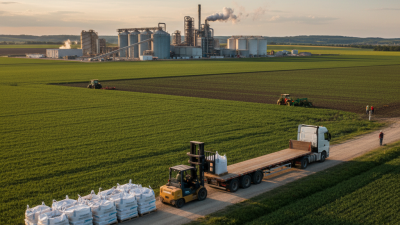
How to Choose the Best Nano Fertilizer for Global Sourcing?
Choosing the best nano fertilizer for global sourcing requires more than comparing prices or particle sizes. Buyers must examine nutrient composition, dispersion stability, coating materials, and proven crop performance. A product may look advanced in a laboratory yet perform poorly in dry soil, alkaline water, or heavy rain. Real conditions matter.
Dr. Ismail Cakmak, a respected plant nutrition scientist, has emphasized, “Efficient fertilizer use is essential for sustainable crop production.” This principle fits nano fertilizer sourcing closely. Smaller particles do not automatically mean better results. Suppliers should provide independent laboratory reports, batch consistency records, safety data, and field-trial evidence from relevant climates. A practical evaluation might include a sealed sample, a water-dispersion test, and visible crop measurements after several application stages. Leaf color alone is not enough.
Ask harder questions.
Can the supplier explain nutrient release rates? Can the product remain stable during ocean transport? Does the packaging protect it from heat and moisture? Buyers should also verify registration requirements, labeling rules, environmental assessments, and permitted application rates in each destination market. Global sourcing becomes risky when technical documents are incomplete or translated carelessly. Even experienced purchasing teams can overlook this.
The best choice is rarely the cheapest quotation. It is the product with reliable evidence, transparent manufacturing, and realistic agronomic claims. Some uncertainty will remain. Nano fertilizer research is developing, and not every promising result survives large-scale farming. A careful sourcing process leaves room for testing, correction, and honest reconsideration before long-term contracts begin.

Define Nano Fertilizer Types, Functions, and Application Methods
How to Choose the Best Nano Fertilizer for Global Sourcing?
Nano fertilizer is not one uniform product. It usually includes nanoscale nutrients, nano-coated granules, or nutrients carried by engineered particles. These types behave differently in soil and on leaves. Nanoscale nutrients may improve contact with plant surfaces. Coated granules can support slower nutrient release. Carrier systems may target roots or leaf tissues.
The function should guide sourcing decisions. Some products aim to improve nitrogen efficiency. Others deliver zinc, iron, or micronutrients during early growth. FAOSTAT separates fertilizer data by nutrient, not by nano technology. This limitation makes market comparisons difficult. The OECD-FAO Agricultural Outlook 2024–2033 expects continued global fertilizer demand, while efficiency remains a major production concern. Buyers should request particle-size data, nutrient concentration, release testing, and independent field results.
Application method matters. Soil incorporation suits coated granules and root-zone delivery. Foliar spraying may support quick micronutrient correction, especially under visible deficiency. Seed treatment can place small nutrient doses near emerging roots. Always check spray stability, nozzle size, water hardness, and crop sensitivity.
The International Organization for Standardization provides nanotechnology terminology, but product performance still depends on crop, soil, climate, and formulation. The category is not as tidy as brochures suggest. Replicated trials are essential. A greenhouse result may fail in saline soil or heavy rain.
Global sourcing should therefore compare verified function, local registration requirements, handling guidance, and transparent test methods—not particle size alone.
Assess Soil Needs, Crop Goals, and Nutrient Requirements
How to Choose the Best Nano Fertilizer for Global Sourcing?
Start with the soil, not the product catalogue. A recent field assessment should measure pH, electrical conductivity, organic matter, and available nutrients. Sandy soil may lose nitrogen quickly, while heavy clay can lock phosphorus away. Low zinc, iron, or boron also changes the product choice. Use an accredited laboratory when possible, and compare results with local agronomic recommendations.
Define the crop goal before selecting a nutrient formula. Leafy vegetables may need steady nitrogen, while fruiting crops often require balanced phosphorus and potassium. Young plants may benefit from small, carefully timed applications. Overfeeding can damage roots and increase runoff. It happens more easily than expected. Review the product’s particle-size data, nutrient concentration, dispersion stability, and release claims. Independent testing is more dependable than attractive sales language.
Sourcing decisions should include practical field evidence. Request batch testing, safety documentation, storage guidance, and clear application instructions. Test a small plot first, especially when soil texture or irrigation varies across farms. Record plant height, leaf color, yield, and any root stress. One trial may not prove long-term performance. Weather can distort results. I have seen a promising treatment fail because irrigation timing was ignored. Supplier documentation should also support destination-market requirements, which differ across countries. A technically strong fertilizer still needs consistent quality and responsible use.
How to Choose the Best Nano Fertilizer for Global Sourcing? - Assess Soil Needs, Crop Goals, and Nutrient Requirements
| Soil Need | Typical Soil-Test Indicator | Crop or Production Goal | Priority Nutrient | Suitable Nano-Fertilizer Category | Application Route | Indicative Timing | Key Benefit to Verify |
|---|---|---|---|---|---|---|---|
| Low available nitrogen | Low soil nitrate or plant tissue nitrogen; pale older leaves and weak vegetative growth | Leafy vegetables, cereals, and rapid canopy development | Nitrogen (N) | Nano nitrogen suspension or controlled-release nitrogen carrier | Foliar spray as a supplement; soil application where permitted by the label | Early vegetative growth; repeat only after crop and tissue assessment | Improved nitrogen-use efficiency without excessive leaf growth |
| Low available phosphorus | Low soil-test P; slow early growth or restricted root development | Transplant establishment, root development, and early crop vigor | Phosphorus (P) | Nano-phosphorus or phosphate particles designed for improved dispersion | Seed or root-zone treatment only where approved; foliar use requires crop-specific validation | At planting or shortly after transplanting | Root-zone phosphorus availability and early establishment |
| Low potassium availability | Low exchangeable K; weak stems, marginal leaf scorch, or poor water regulation | Fruit quality, grain filling, drought tolerance, and lodging reduction | Potassium (K) | Nano-potassium suspension or potassium-containing nanocarrier | Foliar or fertigation, subject to salinity and compatibility checks | Pre-flowering, fruit set, or grain-filling stages | Improved nutrient supply during high-demand growth stages |
| Iron deficiency in alkaline soil | High-pH or calcareous soil; interveinal chlorosis on young leaves | Greener foliage and improved chlorophyll formation | Iron (Fe) | Nano-iron or stable iron dispersion with documented plant-availability data | Foliar spray is commonly evaluated for rapid correction; soil use requires local validation | At the first confirmed symptoms; avoid spraying in high heat | Leaf greening and corrected tissue Fe status |
| Zinc deficiency | Low soil or tissue Zn; short internodes, small leaves, or reduced crop vigor | Early growth, enzyme activity, and reproductive development | Zinc (Zn) | Nano-zinc oxide or soluble zinc nanodispersion with particle and safety documentation | Seed treatment, soil application, or foliar spray according to local registration | Seedling stage or before flowering, depending on crop | Correction of Zn deficiency with low application volume |
| Low calcium supply or fruit disorders | Low exchangeable Ca, uneven moisture, or disorders associated with poor Ca transport | Fruit firmness, cell-wall development, and reduced physiological disorders | Calcium (Ca) | Nano-calcium suspension with verified Ca content and low phytotoxicity risk | Foliar application may supplement, but cannot replace balanced irrigation and root uptake | From flowering through fruit development | Improved tissue Ca status and marketable quality |
| Saline or drought-prone conditions | High electrical conductivity, low available water, or repeated water stress | Stable yield, water-use efficiency, and stress recovery | Usually K, Ca, or micronutrients identified by testing | Low-salt nano nutrient formulation; avoid products with undisclosed sodium or chloride load | Foliar application or carefully managed fertigation | Before anticipated stress and during recovery | Crop response under local salinity and irrigation conditions |
| Soil pH outside the crop target | Many crops perform best near pH 6.0–7.0, but crop-specific targets vary | Improved overall nutrient availability | Determined by soil and tissue analysis | Nano fertilizer should be considered a supplement, not a replacement for liming or soil-acidification practices | Use only after correcting the main pH constraint where practical | Based on a soil-improvement plan | Higher nutrient-use efficiency and reduced deficiency recurrence |
Global Sourcing and Quality Verification Checklist
| Procurement Dimension | Minimum Information to Request | Acceptance Consideration | Why It Matters |
|---|---|---|---|
| Nutrient composition | Guaranteed nutrient analysis, nutrient form, density, pH, and batch certificate of analysis | Values should match the product label and independently tested samples | Confirms that the purchased product can address the identified deficiency |
| Particle characteristics | Particle-size distribution, aggregation behavior, morphology, and test method | Use a defined test method and verify that the specification applies to the supplied batch | Particle behavior affects dispersion, stability, plant exposure, and handling |
| Suspension stability | Settling rate, redispersibility, storage temperature range, and shelf life | Product should redisperse according to written instructions without permanent sediment | Reduces uneven dosing during transport, storage, and field application |
| Impurities and safety | Heavy metals, microbial limits where relevant, safety data sheet, and environmental risk information | Meet destination-market fertilizer, worker-safety, and environmental requirements | Nano-scale materials may require additional risk and exposure assessment |
| Compatibility | Jar-test protocol, mixing order, water-quality limits, and prohibited tank-mix partners | No unacceptable precipitation, nozzle blockage, separation, or crop injury in local tests | Hard water, pH, salinity, and pesticide mixtures can change performance |
| Field performance | Replicated trials under comparable soil, crop, climate, and application conditions | Compare with a conventional nutrient control and untreated control | Demonstrates whether the nano formulation adds value beyond standard fertilization |
| Regulatory readiness | Label, registration status, permitted crops, application rates, transport documents, and country-specific declarations | Confirm approval before import, sale, or use in each destination market | Fertilizer and nano-material rules differ across jurisdictions |
Note: Nutrient selection and application rates should be based on current soil or tissue analysis, crop labels, local regulations, and small-scale compatibility and phytotoxicity tests. Nano fertilizers are generally best evaluated as targeted supplements within an integrated nutrient-management program.
Compare Product Quality, Safety, and Environmental Standards
Global sourcing of nano fertilizer demands evidence beyond a bright product sheet. FAO’s Fertilizer Outlook 2022–2026 projects global nutrient demand at 200.5 million tonnes by 2025. This pressure can reward concentrated inputs, but concentration alone does not prove better agronomy. Ask for particle-size distribution, active nutrient percentage, dispersion stability, and batch-to-batch results. ISO/TR 13014 recommends characterizing size, shape, surface area, chemistry, and aggregation. Small particles behave differently in storage and soil.
Safety files should identify exposure routes, not simply state “non-toxic.” The OECD testing framework stresses physicochemical characterization and hazard assessment for nanomaterials. Request toxicology, ecotoxicity, residue, and worker-handling data. Check whether tests used the actual formulation, not a laboratory substitute. Under EU REACH, nanoforms may trigger registration requirements from one tonne per year. Local rules still differ. That matters.
Environmental claims need measured boundaries. Ask for field trials across soil types, nitrogen-use efficiency, runoff, persistence, and effects on earthworms and beneficial microbes. FAO data shows the scale; even a small efficiency gain could matter, but only if verified. Life-cycle figures should include synthesis, packaging, transport, and disposal. I would question “green” claims based only on lower application rates. One missing control group can distort results. Procurement teams should retain certificates, raw datasets, and independent laboratory reports for every lot.
Verify Suppliers, Certifications, Pricing, and Global Trade Terms
How to Choose the Best Nano Fertilizer for Global Sourcing?
A reliable supplier should provide clear technical evidence, not only attractive product photos. Request a current specification sheet, certificate of analysis, safety data sheet, and particle-size distribution report. Check nutrient concentration, suspension stability, batch consistency, and recommended storage conditions. Certifications should match the destination market and product category. ISO 9001 may show quality management, but it does not automatically prove fertilizer performance. Ask for independent laboratory results and field-trial data from comparable crops and climates. A polished sample can still hide inconsistent production.
Tips: Verify the legal company name, factory address, production capacity, and export history. Contact the testing laboratory directly when possible. Compare at least three suppliers using the same questions. I once focused too heavily on laboratory documents and overlooked weak packaging controls. That mistake changed my sourcing checklist.
Pricing requires more than comparing the quoted unit cost. Confirm the minimum order quantity, packaging format, sample charges, payment schedule, and lead time. Request prices under clear Incoterms, such as FOB or CIF, and identify who handles freight, insurance, customs clearance, and import duties. Confirm the correct HS classification with a qualified customs professional. Include inspection costs, storage, and potential delays in the landed-cost calculation. Cheap cargo can become expensive. Before signing, define inspection rights, replacement terms, document requirements, and dispute procedures in writing.
Plan Field Trials, Regulatory Compliance, and Supply Continuity
How to Choose the Best Nano Fertilizer for Global Sourcing?
Plan Field Trials, Regulatory Compliance, and Supply Continuity
Choosing a nano fertilizer for global sourcing starts in the field, not in a sales presentation. Define the crop, soil type, application method, and target nutrient before requesting samples. Run small, replicated trials across two seasons when possible. Record weather, irrigation, leaf tissue, yield, and visible stress. Keep an untreated control. It matters. A product that performs in a greenhouse may behave differently after heavy rain or alkaline irrigation. Use calibrated sprayers and trained operators. Photograph plots weekly, but do not treat images as proof alone.
Regulatory compliance requires country-specific checking. Ask suppliers for composition data, particle-size distribution, impurity limits, safety data sheets, certificates of analysis, and manufacturing traceability. Confirm whether the product is classified as a fertilizer, soil amendment, or another regulated input. Registration rules can differ between neighboring markets. Local agronomists and legal specialists should review claims before packaging or advertising. Avoid promising guaranteed yield increases. Our early trial plan was too short. It missed delayed soil effects. That mistake changed our review process.
Supply continuity deserves equal attention. Audit production capacity, raw-material sources, batch release procedures, and quality controls. Request retained samples from every lot. Set acceptance specifications for nutrient concentration, dispersion, moisture, and contaminants. Establish a second qualified source, then compare both materials through the same field protocol. Discuss lead times, minimum order quantities, temperature limits, and transport documents. Keep buffer inventory before planting windows. Still, forecasts can fail. Weather, port delays, or a failed batch can disrupt delivery. A written escalation plan, transparent communication, and independent testing provide practical protection.
How to Choose the Best Nano Fertilizer for Global Sourcing?
A practical sourcing plan should balance agronomic validation, regulatory readiness, and supply continuity before commercial scale-up.
The chart shows recommended evaluation emphasis across four sourcing workstreams. Field trials verify performance under local soil and climate conditions, regulatory compliance reduces market-entry risk, and supply-continuity checks assess manufacturing capacity, quality consistency, logistics, and backup sourcing.
Related Posts
-
What is the Role of Wholesale Fertilizer Suppliers?
-

2026 Best Wholesale Fertilizer Distributors Worldwide
-
Wholesale Fertilizer Best Suppliers for Global Buyers?
-
How is Organic Fertilizer Production Beneficial for Farming?
-
Top 10 Urea Suppliers: Key Factors to Consider for Your Sourcing Needs
-
How to Choose the Right Agricultural Fertilizer for Maximum Crop Yield