Why Choose Green Fertilizer for Sustainable Farming?
Modern farming must produce more food while reducing pressure on soil, water, and the climate. Green fertilizer offers one promising pathway. It commonly includes fertilizers made with renewable energy, low-carbon hydrogen, recycled nutrients, or biological inputs. The meaning is not always consistent. Buyers should examine the full production process.
The International Energy Agency’s Ammonia Technology Roadmap reports that ammonia production reached about 185 million tonnes in 2021. It also caused roughly 450 million tonnes of direct carbon dioxide emissions. Much of this ammonia becomes nitrogen fertilizer. Replacing fossil-based hydrogen with renewable hydrogen could reduce this footprint significantly. However, the benefit depends on reliable renewable electricity and efficient manufacturing. Green does not mean impact-free.
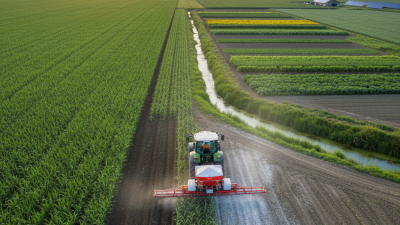
On a farm, the difference can appear in practical details. A farmer may apply stabilized nitrogen before rainfall, monitor leaf color, and avoid spreading fertilizer beside a drainage ditch. These choices can improve nutrient-use efficiency and limit runoff. The Food and Agriculture Organization emphasizes balanced nutrient management, soil testing, and site-specific application. Those practices remain essential, even when the product has a lower production footprint.
There is no single perfect fertilizer.
The Intergovernmental Panel on Climate Change identifies agriculture, forestry, and land-use activities as major sources of global greenhouse gas emissions. Green fertilizer can support climate goals, but it cannot replace crop rotation, healthy soils, or careful irrigation. Certification, lifecycle assessment, and transparent supplier data matter. Some claims may sound impressive. They still require verification.
This article examines the evidence, costs, and practical limits behind green fertilizer. It asks a necessary question: can cleaner fertilizer production deliver measurable benefits across the entire farm system?
What Is Green Fertilizer and How Does It Work?
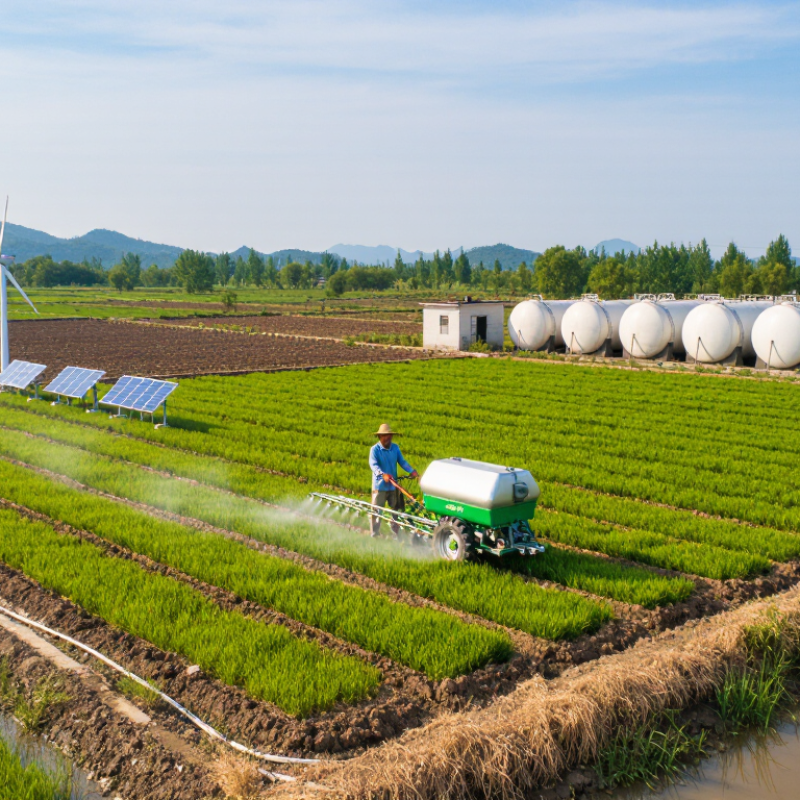
Green fertilizer usually means fertilizer made with lower-carbon energy or biological processes. Its clearest industrial form uses renewable electricity to split water into hydrogen and oxygen. The hydrogen then combines with nitrogen from the air, producing ammonia. Ammonia can become urea or nitrate fertilizer for field application.
The process is technical, not mysterious. Crops still need nitrogen, phosphorus, and potassium. Green production changes how these nutrients are supplied. Biological fertilizers may use microbes that fix atmospheric nitrogen or release phosphorus locked in soil. The International Energy Agency reports that hydrogen production causes about 900 million tonnes of carbon dioxide emissions annually. Replacing fossil-based hydrogen could reduce fertilizer-related emissions, but only when renewable power is genuinely available.
Field results require careful measurement. The Food and Agriculture Organization reports that global fertilizer use remains close to 190 million tonnes of nutrients each year. This scale makes efficiency essential. A farmer may apply a nitrogen fertilizer beside young maize, then monitor leaf color and soil nitrate after rainfall. Better timing can reduce losses through runoff and nitrous oxide emissions. Still, “green” does not guarantee success. Manufacturing, transport, storage, and over-application can weaken its climate benefit. The IFA’s fertilizer sustainability reports also stress nutrient-use efficiency, not simply alternative production. That distinction matters. More data is needed from long-term farm trials.
Which Types of Green Fertilizer Are Commonly Used?
Green fertilizer is not one product. It is a group of inputs that can improve soil while reducing dependence on synthetic nutrients. Common choices include compost, animal manure, green manure, biofertilizers, and anaerobic digestate.
Compost adds stable organic matter and supports soil structure. Mature compost should smell earthy, not sour. It can help sandy soil hold water, although nutrient levels vary widely. Animal manure supplies nitrogen, phosphorus, and potassium, but farmers should test it before application. Fresh manure may burn seedlings or introduce pathogens. Green manure uses crops such as legumes, clover, or vetch. Their roots protect soil between harvests, while legumes can fix atmospheric nitrogen. Biofertilizers contain useful microbes, including nitrogen-fixing bacteria and mycorrhizal fungi. Their performance depends on moisture, temperature, and soil conditions. Results vary.
Digestate, produced from anaerobic digestion, can recycle nutrients from farm residues. However, its nutrient balance and salt content require laboratory testing. The Food and Agriculture Organization reports that global fertilizer use reached roughly 185 million tonnes of nutrients in 2021. This scale shows why nutrient efficiency matters. FAO also identifies nutrient losses and soil degradation as major agricultural concerns. The International Federation of Organic Agriculture Movements and FiBL reported 96.4 million hectares under organic management in 2022, indicating growing interest in biological soil management. Still, green fertilizer is not automatically sustainable. Transport distance, methane emissions, contamination, and over-application can weaken its benefits. I would measure soil nitrogen, phosphorus, pH, and organic matter before changing a field program. That practical step is often missed.
Why Choose Green Fertilizer for Sustainable Farming?
Typical nutrient content of commonly used green fertilizers
Green fertilizers improve soil organic matter, support beneficial soil organisms, and recycle nutrients with lower reliance on synthetic inputs. Poultry manure generally provides the highest nitrogen content, while compost, cattle manure, vermicompost, and legume-based green manure contribute nutrients more gradually. Actual nutrient values vary according to feedstock, moisture content, maturity, and processing.
Values shown are representative dry-weight nutrient analyses. N = total nitrogen, P₂O₅ = phosphate equivalent, K₂O = potash equivalent.
How Does Green Fertilizer Support Soil Health?
Green fertilizer, especially legume-based green manure, feeds soil biology rather than only crops. Farmers grow plants such as clover, vetch, or peas, then return their biomass to the soil. This adds carbon, nitrogen, and small organic residues that earthworms and microbes can process.
The soil changes visibly.
A crumbly surface can replace hard, crusted ground after repeated organic inputs. Roots also create channels, helping rain move into the soil instead of running across fields. The Food and Agriculture Organization reports that about 33% of global soils face moderate or high degradation risks. Green fertilizer cannot repair every damaged field, but it can support aggregation, water retention, and nutrient cycling when matched with local conditions.
Research evidence remains uneven. A USDA Natural Resources Conservation Service review links cover crops with lower erosion, improved infiltration, and stronger soil structure. However, results depend on climate, crop choice, termination timing, and residue management. Poorly timed incorporation may temporarily reduce available nitrogen. That is easy to overlook.
The FAO’s 2021 soil carbon assessment also emphasizes that soil organic carbon varies widely by land use and management. Farmers should test soil organic matter, nitrate levels, and compaction before changing applications. A simple field check helps: squeeze moist soil in your hand, then inspect whether it holds a loose crumb or forms a dense block. Green fertilizer works best as part of a measured rotation, not as a universal fix.
Why Choose Green Fertilizer for Sustainable Farming? - How Does Green Fertilizer Support Soil Health?
| Soil Health Dimension | How Green Fertilizer Supports It | Common Green Fertilizer Examples | Useful Measurement | Expected Sustainable-Farming Benefit |
|---|---|---|---|---|
| Soil organic matter | Plant residues and roots add carbon-rich material that decomposes into soil organic matter. | Cover crops, green manure crops, cereal grasses, legumes | Soil organic matter or soil organic carbon percentage | Improved nutrient storage, aggregation, and resilience to drought and heavy rainfall. |
| Nitrogen availability | Legume roots form symbiotic relationships with rhizobia that convert atmospheric nitrogen into plant-available forms. | Clover, vetch, field peas, beans, and other legumes | Residual soil nitrate, plant tissue nitrogen, and crop nutrient analysis | Better nitrogen cycling and potentially lower dependence on manufactured nitrogen inputs when properly managed. |
| Nutrient retention | Living roots take up nutrients between cash crops, reducing the time nutrients remain exposed to leaching or runoff. | Rye, oats, barley, ryegrass, and mixed cover-crop stands | Soil nitrate before and after the cover-crop period; drainage-water nitrate where monitored | More efficient nutrient cycling and reduced risk of nutrient loss from bare soil. |
| Soil structure | Roots physically stabilize soil particles, while decomposing residues help form and maintain soil aggregates. | Deep-rooted grasses, brassicas, legumes, and mixed species | Aggregate stability, bulk density, and visual soil-structure assessment | Less compaction and improved root growth, air movement, and water flow through the soil profile. |
| Water infiltration and storage | Organic matter and stable aggregates create more usable pore space, while plant residues protect the surface. | Grass-legume mixtures, composted green biomass, and surface mulch from cover crops | Infiltration rate, water-holding capacity, and soil-moisture observations | More effective rainfall use and lower surface-water runoff during intense rain. |
| Erosion protection | Living vegetation and crop residues cover the soil surface and reduce the force of wind and raindrops. | Winter cereals, forage grasses, clover, and multi-species cover crops | Percentage of soil covered, visible sediment loss, and erosion-risk assessment | Reduced topsoil loss and improved protection of productive soil. |
| Soil biological activity | Root exudates and decomposing residues provide food and habitat for microorganisms and soil fauna. | Diverse cover-crop mixtures and crops with active root systems | Microbial biomass, soil respiration, earthworm counts, and enzyme activity | More active decomposition and nutrient cycling, subject to climate and management conditions. |
| Weed suppression | Fast-growing cover crops compete with weeds for light, water, nutrients, and physical space. | Dense cereal covers, vetch mixtures, and other well-established cover crops | Weed density, weed biomass, and weed-seed production | Lower weed pressure and improved opportunities for integrated weed management. |
| Soil pH and nutrient balance | Green fertilizers contribute nutrients and carbon, but their effect on pH depends on crop type, biomass, decomposition, and existing soil conditions. | Legumes, grasses, brassicas, and mixed green manure crops | Laboratory soil-pH test, cation-exchange capacity, and available nutrient analysis | More informed nutrient management; soil testing remains necessary because green fertilizer does not replace targeted lime or fertilizer applications in every field. |
Note: Results vary with species selection, biomass production, soil type, climate, termination timing, and incorporation or surface-management practices. Soil testing and local agronomic guidance should be used to quantify field-specific changes.
What Environmental Benefits Does Green Fertilizer Provide?
Why Choose Green Fertilizer for Sustainable Farming?
Green fertilizer can reduce agriculture’s environmental pressure when it is produced and applied carefully. Compost, plant-based nutrients, and green manure return organic matter to the soil. This can improve water retention and reduce erosion after heavy rain. Healthier soil may also store more carbon, although results vary with climate, soil type, and management. The benefit is not automatic.
Field experience shows that overapplication can still pollute waterways. Excess nitrogen may wash into streams, causing algae growth and oxygen loss. Poorly managed organic materials can also release methane or unpleasant odors. Farmers should test soil before application and monitor crop growth afterward. These steps support reliable nutrient decisions.
Tips: Choose well-processed materials with known nutrient levels. Apply fertilizer near active root zones. Avoid spreading before strong rainfall. Keep records of application rates, crop yields, and soil changes. A simple soil test often reveals more than appearance alone. Green fertilizer is useful, but it is not magic.
What Factors Should Farmers Consider Before Using It?
Choosing green fertilizer is not simply an environmental decision. Farmers should examine its nutrient content, production method, price, and field performance. The International Energy Agency reports that ammonia production reached about 180 million tonnes in 2020, with most used in fertilizer. Conventional production also creates substantial emissions. Green ammonia can reduce these emissions when renewable electricity powers hydrogen production. However, its climate benefit depends on the electricity source and transport system.
Soil testing should come before any purchase. A field with low nitrogen may need a different product from one lacking phosphorus or potassium. Farmers should compare nutrient concentration, application timing, storage needs, and equipment compatibility. The Food and Agriculture Organization reported global fertilizer nutrient use at nearly 190 million tonnes in 2021. This scale shows why efficiency matters, not only cleaner production. Split applications, precision spreading, and protected storage can reduce losses.
Cost remains a difficult question. Green fertilizer may carry higher production and transport costs, especially where renewable power or distribution networks are limited. Farmers should calculate cost per kilogram of available nutrient, not cost per bag. They should also request credible emissions data, renewable-energy evidence, and independent field results. Certification can help, but labels are not always equal. Results vary with rainfall, soil texture, and crop variety. A promising trial may fail on a dry field. That possibility deserves attention before changing a whole farm’s nutrient plan.
Related Posts
-
2026 Top Field Fertilizer Types for Optimal Crop Growth?
-
2026 Top Types of Farm Fertilizer for Global Buyers
-
Why Choose Field Fertilizer for Higher Crop Yields?
-
How to Use Green Fertilizer for Healthier Plants?
-
10 Effective Tips for Using Green Fertilizer in Your Garden?
-
Top Fertilizer Companies Leading the Industry Today?