
What Are the Top Types of Green Fertilizer?
Green fertilizer is not one product, but a family of approaches that can reduce reliance on fossil-based inputs or improve nutrient cycling. The main types include compost and manure-based fertilizers, microbial biofertilizers, plant-derived products, and mineral fertilizers made with renewable energy. Their benefits differ. A compost pile can return organic matter to soil, while microbial inoculants may help plants access specific nutrients. Results depend on crop, soil, climate, and application practices.
The scale of the challenge is significant. The International Energy Agency’s Ammonia Technology Roadmap reports that ammonia production uses about 2% of global final energy and contributes roughly 1.3% of energy-related carbon dioxide emissions. Renewable-powered ammonia could therefore help decarbonize some nitrogen fertilizer production, although it does not make every fertilizer or farming practice sustainable. Bill Gates, a climate-technology author and investor, writes in How to Avoid a Climate Disaster: “The first thing you need to know about fertilizer is that it’s made from natural gas.” That observation points to an important production challenge, not a complete verdict on fertilizer’s impacts.
This guide compares the leading green fertilizer types, their practical uses, and their limitations. The categories can overlap, and product labels do not always tell the whole story. That deserves scrutiny. Readers should look for credible evidence on nutrient content, production methods, and performance under local conditions, rather than relying on “green” claims alone.
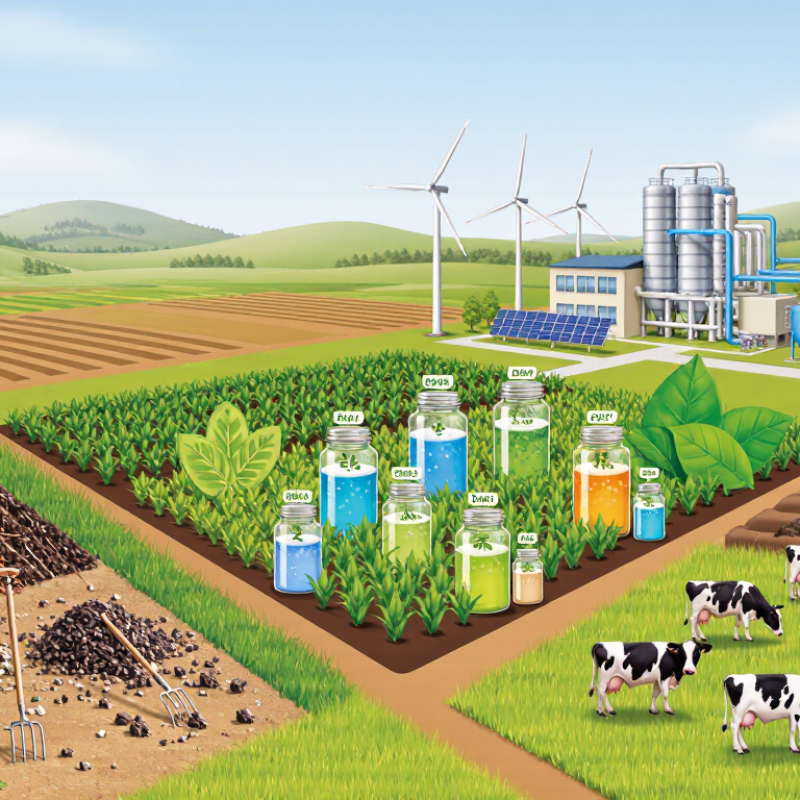
How Green Fertilizers Are Classified by Nutrient Source and Soil Function
Green fertilizers are best classified by where their nutrients come from and what they do in soil. Plant-based inputs include legume cover crops and composted crop residues; animal-based inputs include manure and other processed organic materials. Microbial inoculants form another group: selected bacteria or fungi can help plants access nutrients, but they do not replace every nutrient removed at harvest. Recycled nutrient products add a further category. Their composition varies, so soil testing matters.
Their functions overlap. A legume cover crop can add biologically fixed nitrogen, while its roots and leftover stems feed soil organisms and protect bare ground. Compost supplies nutrients more gradually and adds organic matter, though its nutrient balance can be uneven. Microbial products may support nutrient availability, but results depend on crop, soil, and weather. Not magic.
The scale of nutrient demand makes careful classification useful. FAO’s World Fertilizer Trends and Outlook to 2026 estimated global fertilizer demand at about 185 million tonnes of nitrogen, phosphate, and potash nutrients in 2022. That figure covers fertilizer demand broadly, not green fertilizers alone. It shows why green inputs are often best judged by their specific role: replacing nutrients, improving soil structure, or supporting biological activity. One field can need all three, and no single input reliably does everything.
| Type | Main Nutrient Source | Typical Examples | Primary Soil Function | Nutrient Contribution | Best Fit and Key Consideration |
|---|---|---|---|---|---|
| Legume green manures | Plant biomass; nitrogen fixed from the atmosphere by symbiotic root bacteria | Clover, field peas, vetch, and sunn hemp | Add organic matter, protect soil between crops, and contribute biologically fixed nitrogen when incorporated or left as residue | Often an important nitrogen contribution; phosphorus and potassium mainly come from nutrients already present in the soil and plant tissue | Useful in rotations where nitrogen is needed. The amount available to a following crop depends on growth, termination timing, and residue decomposition. |
| Non-legume cover crops and green manures | Nutrients absorbed from the soil and stored in shoots and roots | Rye, oats, forage radish, and mustard | Reduce erosion, capture residual nutrients, add root channels, and return nutrients to the surface as residues decompose | Do not fix atmospheric nitrogen; grasses can temporarily tie up nitrogen while high-carbon residues decompose | Good for ground cover and nutrient retention. Choose species and termination timing to match the crop rotation and local climate. |
| Compost | Decomposed plant residues and, in some formulations, animal-derived materials | Mature compost made from yard trimmings, crop residues, or mixed organic materials | Build soil organic matter, support aggregation, and improve water retention and biological activity | Usually supplies nutrients gradually; nutrient levels vary with feedstocks and composting methods | Suitable for improving soil condition. Test compost and soil before applying, especially where phosphorus or salts may accumulate. |
| Animal manures | Animal waste, sometimes combined with bedding | Cattle, poultry, or horse manure; solid manure or liquid slurry | Supply organic matter and nutrients while supporting soil biological activity | Can provide nitrogen, phosphorus, and potassium; proportions and plant availability vary by source, storage, and treatment | Apply according to nutrient analysis and crop needs. Proper handling and timing help reduce nutrient runoff and food-safety risks. |
| Microbial biofertilizers | Beneficial microorganisms that fix nitrogen or help make certain nutrients more available to plants | Rhizobia inoculants for compatible legumes; selected mycorrhizal fungi and phosphate-solubilizing microbes | Support nutrient cycling, root access to nutrients, or plant nutrient uptake under suitable conditions | Do not necessarily add substantial quantities of nutrients; effects depend on the organism, crop, soil, and application conditions | Best used for a compatible crop and soil context. They complement, rather than automatically replace, nutrient inputs. |
| Plant-based organic fertilizers | Processed plant materials and their naturally occurring nutrients | Oilseed meals, legume meals, and other plant-derived amendments | Add organic matter and release nutrients as soil organisms decompose the material | Nitrogen, phosphorus, and potassium content varies by material; release is generally influenced by moisture and temperature | Useful where a plant-derived nutrient source is preferred. Check product analysis and follow application guidance. |
| Seaweed and algae-based amendments | Marine or freshwater algae biomass or extracts | Seaweed meal and algae-based soil amendments | May contribute organic matter and small quantities of nutrients; some products are used as soil or plant biostimulants | Usually not a complete fertilizer; nutrient content varies and may be modest compared with crop requirements | Consider as a supplement, not a guaranteed substitute for a balanced nutrient program. Verify composition and salinity where relevant. |
Note: “Green fertilizer” is used broadly for organic, biological, and cover-crop-based nutrient approaches. Nutrient content and release rates vary; soil testing and local recommendations help determine appropriate application rates.
Related Posts
-
Why Choose an Organic Fertilizer Company for Global Supply?
-
Top 10 Organic Fertilizer Companies for Global Buyers
-
Top 10 Organic Fertilizer Companies for Global Buyers?
-
10 Effective Tips for Using Green Fertilizer in Your Garden?
-
Why Choose Green Fertilizer for Sustainable Farming?
-
Why Choose Green Fertilizer for Sustainable Farming?