Who Are the Top Agricultural Fertilizer Suppliers in China?
China is a major producer of nitrogen, phosphate, and potash fertilizers, serving both domestic farms and international buyers. For importers, identifying a reliable agricultural fertilizer supplier means looking beyond production scale. Product consistency, technical support, transparent specifications, and delivery capacity matter in the field.
The Food and Agriculture Organization’s World Fertilizer Trends and Outlook to 2026 projected global fertilizer nutrient use would reach 208.3 million tonnes by 2026. This long-term demand outlook helps explain why China’s supplier market attracts attention. But global demand figures do not show which company can meet a buyer’s specific needs. That distinction matters.
This article introduces leading Chinese suppliers and explains how to assess them. It considers product range, manufacturing scale, export experience, quality documentation, and service responsiveness. A company’s published capacity is useful, but it is not proof of current availability or consistent quality. Ask for recent product specifications, independent test results, and clear shipment terms. Check them.
Readers should also distinguish manufacturers from trading companies, since their production control and support may differ. Company profiles and trade records can change, so verify details directly before making a purchasing decision. This guide offers a practical starting point, not a substitute for supplier due diligence. The market is broad. Even a well-known name may not suit every crop, soil, or delivery schedule.
China’s Fertilizer Market: 55.4 Million Tonnes Produced in 2023
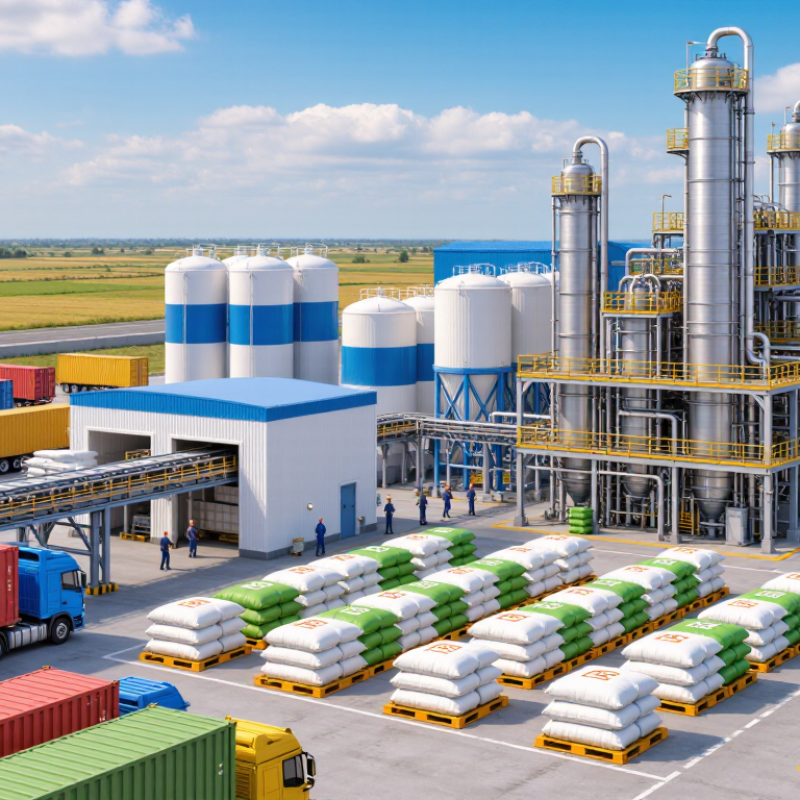
China’s chemical-fertilizer output reached 55.4 million tonnes in 2023, according to the National Bureau of Statistics of China’s Statistical Communiqué. This figure signals substantial domestic production capacity. It does not, by itself, show how much fertilizer farmers applied or which nutrients were available in each region. Output and field use are different measures.
The distinction matters when comparing reports. FAOSTAT’s fertilizer-use data tracks nutrients such as nitrogen, phosphate, and potash, rather than simply counting tonnes of factory output. The two figures should not be treated as interchangeable. For growers, supply also depends on product type, transport distance, soil conditions, and crop timing. A large national total can hide local shortages. That is an easy detail to miss.
Tips: Check soil-test results before choosing inputs. Match application rates to crop stage, and compare nutrient content—not just bag weight. Production figures offer useful context, but they cannot replace local agronomic advice.
How to Compare Suppliers: Capacity, Product Mix, and Distribution
Who Are the Top Agricultural Fertilizer Suppliers in China?
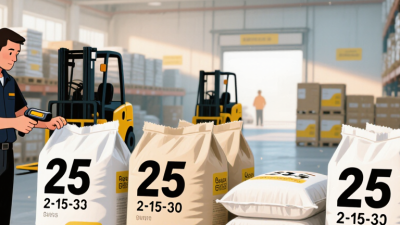
Compare suppliers by usable capacity, product mix, and delivery reach—not brochure claims alone. IFA’s May 2024 Short-Term Fertilizer Outlook projected global fertilizer nutrient use at about 205 million tonnes in 2024/25. That scale makes seasonal reliability important. Ask for recent monthly output, plant utilization, maintenance schedules, and order allocation during peak planting periods. Numbers need context. I would treat stated capacity cautiously unless the supplier can explain how much production is currently available.
Check whether the product range matches your crops and soil needs. Ask for specifications covering nitrogen, phosphate, and potash content, plus moisture and granule size. Recent batch test reports are more useful than a long product list. A broad catalog can hide limited production of the grades you actually need. That matters.
Distribution can affect delivered cost as much as the factory price. Map warehouse locations against your destination, then request typical lead times and shipment records for the relevant season. Confirm whether orders move by road, rail, or port, and whether local stock is routinely replenished. A strong plant may still be a poor fit if every delivery travels far. Published figures rarely show this friction clearly.
Who Are the Top Agricultural Fertilizer Suppliers in China? — How to Compare Suppliers: Capacity, Product Mix, and Distribution
Supplier comparison by operating model. These are industry categories, not named or ranked companies; actual capacity and availability vary by supplier and season.
| Supplier type | Capacity and supply considerations | Typical product mix | Distribution pattern | Suitable purchasing needs | What to verify |
|---|---|---|---|---|---|
| Integrated nitrogen fertilizer producer | Production is linked to ammonia and downstream nitrogen fertilizer operations. Confirm current plant output, maintenance schedules, and contracted volumes rather than relying on nameplate capacity alone. | Urea is a common product; its standard fertilizer grade is 46-0-0 (46% nitrogen). Some producers also offer other nitrogen fertilizers. | May supply agricultural distributors and large-volume buyers directly, with regional delivery depending on plant location and logistics. | Buyers seeking bulk nitrogen fertilizer or regular seasonal deliveries. | Guaranteed nutrient analysis, moisture and biuret specifications where relevant, production origin, delivery lead time, and quality documentation. |
| Phosphate fertilizer producer | Capacity and product availability depend on phosphate rock, processing facilities, and operating conditions. Ask for confirmed, deliverable volume for the required period. | Common products include diammonium phosphate (DAP), often graded 18-46-0, and monoammonium phosphate (MAP), with grades varying by product and specification. | Typically distributed through agricultural wholesalers, regional dealers, and bulk or bagged channels. | Buyers needing phosphorus-rich fertilizers or phosphate products for compound-fertilizer production. | Exact grade, water-soluble phosphorus details, granule condition, packaging, batch test results, and delivery terms. |
| Potash supplier or importer | Supply may come from domestic production, imports, or a combination. Import-dependent offers can be affected by international sourcing, port handling, and inland transport. | Potassium chloride (MOP) is commonly sold in a 0-0-60 grade; potassium sulfate (SOP) is another option for crops or soils where chloride management matters. | Often moves through ports, bulk terminals, regional warehouses, and fertilizer distributors before reaching farms. | Buyers requiring potassium fertilizer, particularly those comparing MOP and SOP for crop and soil needs. | Origin, guaranteed K₂O content, chloride or sulfur specifications, shipment timing, storage conditions, and inland freight cost. |
| Compound NPK fertilizer manufacturer | Manufacturing capacity may include chemical processing, granulation, or physical blending. Confirm whether the quoted product is chemically compounded or blended and whether the plant can maintain the requested grade consistently. | Offers multiple nitrogen-phosphorus-potassium formulations. A 15-15-15 grade is a familiar example; actual grades and nutrient sources differ by product. | Commonly sold through provincial and county-level distributors, agricultural retailers, and direct supply arrangements for larger farms. | Buyers who need a balanced, crop-specific nutrient formulation or one product for easier application. | Guaranteed analysis, nutrient sources, granule uniformity, applicable product standard, batch consistency, and any requested secondary or micronutrients. |
| Bulk-blending and regional fertilizer supplier | Relies on sourcing nutrient components and blending them to order. Its practical capacity depends on component inventory, blending lines, and local delivery resources. | Can provide customized NPK blends and selected secondary or micronutrients, subject to available raw materials and product specifications. | Often operates close to regional agricultural markets, serving local dealers, cooperatives, and farms. | Buyers seeking a locally tailored formulation, smaller delivery lots, or shorter regional delivery routes. | Blend uniformity, component traceability, written formulation, minimum order quantity, sampling method, and delivery coverage. |
Comparison tip: Compare delivered cost per unit of nutrient—not only price per tonne—and request current product specifications, batch certificates, confirmed quantities, and written delivery terms before placing an order.
Leading Nitrogen and Phosphate Suppliers: Yuntianhua, Hubei Yihua, and Luxi
China’s leading nitrogen and phosphate suppliers support farms with products such as urea, ammonium-based fertilizers, and phosphate blends. Nitrogen production depends heavily on reliable energy and feedstock access, while phosphate manufacturing relies on mineral inputs and careful processing. Some large producers connect raw-material sourcing, manufacturing, and distribution, helping them serve multiple regions. Product availability can still vary with seasonal demand, transport capacity, and production schedules.
For buyers, supplier evaluation should go beyond annual output. Check product specifications, batch test documents, delivery timelines, and storage guidance. A clear technical data sheet can help confirm nutrient content and suitability for local soils. For example, a distributor planning spring applications needs dependable delivery before fields are ready, not merely a competitive quotation. Ask how the supplier handles delayed shipments and quality concerns. Scale matters. But it is not the whole story. I would also compare consistency across batches; this detail is easy to overlook, and supplier information may not always make it obvious.
Major Compound Fertilizer Suppliers: Sinofert, Kingenta, and Stanley
China’s major compound-fertilizer suppliers serve farms with blends designed for different crops, soils, and growing seasons. Their scale can support broad distribution, but product quality and local availability still deserve checking. A large supplier may offer several nutrient ratios, including blends for grains, vegetables, or fruit. The label matters. Compare nitrogen, phosphorus, and potassium content, then confirm the figures against local soil-test results.
When comparing suppliers, look beyond price per bag. Ask about batch consistency, storage guidance, and technical support from local distributors. Granules should be dry and reasonably uniform, without heavy clumping in the bag. Delivery timing also matters, especially before a narrow planting window. Supplier reputation can help narrow a shortlist, but it cannot replace checking product documentation and speaking with nearby growers. I would not assume that one blend suits every field; that shortcut can be costly.
Tips: Keep a soil-test report beside the product label. Check the nutrient ratio, application rate, and storage instructions before ordering. Record results after harvest, too. One season offers clues, not proof.
Potash Supply: China Imported About 11.8 Million Tonnes of KCl in 2023
China Customs’ 2023 trade statistics put China’s potassium chloride (KCl) imports at about 11.8 million tonnes. That is a large volume, but it should not be read as a direct measure of fertilizer use: imports may enter storage, move through distribution networks, or serve different crop regions. One caution: headline tonnage can hide timing and inventory changes.
The International Fertilizer Association’s Medium-Term Fertilizer Outlook 2024–2028 tracks potash demand separately from nitrogen and phosphate, reflecting its distinct supply and market dynamics. For buyers, the import figure highlights China’s exposure to overseas KCl supply alongside domestic production. A port-side stockpile and a farm’s spring application schedule are connected, but not identical. Comparing import volumes with domestic output, inventories, and seasonal demand gives a more useful view of supplier capacity. It is easy to overread one year’s number.
Tips: Check whether a quoted figure measures KCl product tonnes or K₂O nutrient equivalent. They are not interchangeable. Also compare shipment timing, grade, and delivery location before judging supply reliability.