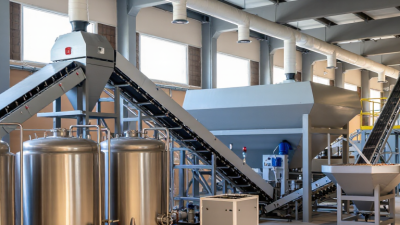
What Are the Top Types of Organic Fertilizer Production?
Organic fertilizer production turns plant residues, animal manures, and food scraps into materials that can support soil fertility. The process matters: temperature, moisture, airflow, and curing time affect the finished product. Small changes can make a real difference.
Sir Albert Howard wrote, “The health of soil, plant, animal and man is one and indivisible” in An Agricultural Testament (1940). His words offer a useful lens for comparing production methods, though they do not replace modern testing. This guide looks at composting, vermicomposting, anaerobic digestion, fermentation, and manure-based processing. Each handles feedstocks differently. Each has trade-offs.
A compost pile, for example, needs suitable moisture and enough air; a dry, compacted heap may break down slowly. Worm-based systems need gentler conditions, while digesters require controlled operation and careful handling of the resulting materials. There is no universal best method. Feedstock availability, site scale, labor, equipment, and product testing all shape the choice. Even a well-managed process can produce uneven results. That deserves attention. The sections ahead compare how these systems work, what they need, and where their limitations appear, so readers can judge which approach fits their situation.
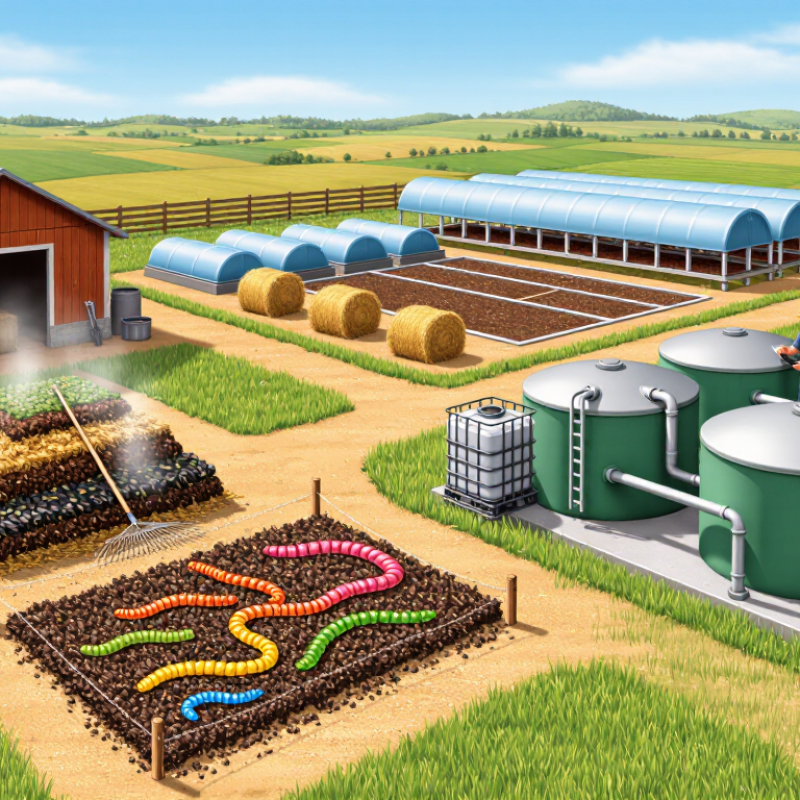
Organic Fertilizer Production: Core Principles and Feedstocks
Organic fertilizer production begins with feedstock selection, not machinery. Clean plant residues, livestock manure, and separated food scraps each bring different nutrient profiles. FAO’s Food Waste Index Report 2024 estimates that 1.05 billion tonnes of food waste were generated worldwide in 2022. That figure signals a large potential resource, not a ready-made fertilizer stream. Contamination, salt, and excess moisture can undermine a batch. Sorting matters. Source-separated scraps are easier to manage than mixed waste, while manure often needs bulking materials such as dry leaves or chopped straw.
Composting depends on oxygen, moisture, particle size, and heat. U.S. EPA guidance suggests a practical starting point near a 30:1 carbon-to-nitrogen ratio and 40–60% moisture. Too wet, and air spaces fill; too dry, and microbes slow. Turn or aerate the pile, and track internal temperature with a probe rather than guessing from the surface. Curing is important. Mature material is less likely to immobilize nitrogen or harm roots. Still, these targets are not universal: woody residues, climate, and pile scale change management needs. Testing finished compost for nutrients, pH, and contaminants supports reliable field use, though small producers may skip it—a real weakness.
Composting: Turning Organic Waste into Stable Fertilizer
Composting turns food scraps, leaves, and other organic residues into a more stable soil amendment. A well-managed pile needs a balance of carbon-rich “browns” and nitrogen-rich “greens,” plus moisture and air. Cornell Waste Management Institute guidance places a useful starting carbon-to-nitrogen ratio near 30:1. In practice, dry leaves and food scraps rarely arrive in perfect proportions. Adjust the mix as it changes.
Heat matters. Microbes warm the pile as they break down material; turning it adds oxygen and helps prevent sour odors. The U.S. Environmental Protection Agency’s 2018 Advancing Sustainable Materials Management report estimated that about 25 million tons of U.S. municipal solid waste were composted that year. That scale is encouraging, but it does not mean every compost pile produces consistent fertilizer. Feedstock, moisture, and curing time all affect the final product. A pile can look finished while still needing more time.
Tips: Keep the pile damp, like a wrung-out sponge. Turn it when the center cools or smells unpleasant. Let finished compost cure before use; patience is easy to overlook.
What Are the Top Types of Organic Fertilizer Production? — Composting: Turning Organic Waste into Stable Fertilizer
| Composting Method | Typical Feedstocks | How It Works | Typical Active Processing Time | Temperature and Conditions | Typical Product and Considerations |
|---|---|---|---|---|---|
| Turned windrow composting | Yard trimmings, crop residues, food scraps, and suitable animal manures | Materials are formed into long piles and periodically turned to mix ingredients and improve airflow. | Several weeks to a few months, followed by curing as needed | Well-managed piles commonly enter a thermophilic phase, often around 55–65°C (131–149°F). Moisture and aeration need regular attention. | Produces a stabilized compost suitable for soil improvement. Turning frequency and pile size affect processing time and temperature. |
| Aerated static pile | Blended yard waste, food-processing residues, and other compostable organic materials | A pile rests over perforated pipes or an aeration floor; blowers supply or draw air through the material. The pile is generally not turned during active processing. | Several weeks for active processing, plus curing | Can reach thermophilic temperatures when the mix, moisture, and airflow are well managed. Temperature monitoring helps verify process performance. | Uses less routine turning than windrows. A suitable bulking material helps maintain air spaces and prevent compaction. |
| In-vessel composting | Food scraps, source-separated organics, and selected manure or agricultural residues | Material is processed in an enclosed drum, container, or reactor, where mixing and aeration can be controlled. | Days to several weeks in the reactor, followed by curing | Temperature, airflow, and mixing are managed within the equipment; actual conditions depend on the system and feedstock. | Offers greater process control and helps contain odors. The material usually needs additional curing before it is fully stable. |
| Static pile composting | Leaves, grass clippings, garden residues, and chipped woody material | Organic materials are piled and left to decompose, with limited or no turning. Some piles rely on natural airflow; others use simple aeration. | Several months to a year or longer, depending on materials and management | Temperatures can vary across the pile. A suitable mix, adequate moisture, and airflow support decomposition. | Requires relatively little equipment, but decomposition is slower and less uniform than in actively managed systems. |
| Vermicomposting | Vegetable and fruit scraps, shredded paper, and other suitable moist organic materials | Composting worms and microorganisms break down the material in a moist, oxygenated, non-thermophilic system. | Often several weeks to a few months | Kept within a range suitable for the chosen worms; excessive heat, dryness, or waterlogging can harm them. | Produces worm castings and partly decomposed organic matter. It is generally unsuitable for hot, freshly composting piles or large amounts of meat and oily waste. |
| Bokashi fermentation | Kitchen food scraps, including some cooked foods, fermented in a sealed container with an inoculated bran | Microorganisms ferment the scraps under low-oxygen conditions. The fermented material is then buried or added to a composting process to finish decomposing. | Fermentation commonly takes about 1–2 weeks; further decomposition is needed afterward | Kept sealed and drained as directed by the system. It is a fermentation stage, not thermophilic composting. | Convenient for small-scale food-scrap handling, but the fermented material is not finished, mature compost until it has decomposed further. |
Note: Processing times and temperatures are typical ranges, not guarantees. They vary with feedstock composition, pile size, moisture, aeration, climate, and management. A balanced initial carbon-to-nitrogen ratio near 25–30:1 is commonly used as a composting guideline.
Manure Processing: Producing Nutrient-Rich Soil Amendments
Manure processing turns livestock waste into a useful soil amendment, but the feedstock is not uniform. Bedding, animal diet, storage, and moisture all change its nutrient content. A practical line removes stones and plastic, blends the manure, and controls moisture before composting. Aeration and turning supply oxygen, while a covered curing area helps protect finished material from rain. The result can add organic matter and nutrients, though nitrogen losses and uneven maturity remain real concerns.
The USDA National Organic Program specifies composting conditions of 131–170°F (55–77°C): at least three days in an in-vessel or aerated static pile, or 15 days in a windrow with at least five turns. These process figures offer a useful operating reference, not proof that every batch is mature or safe. Track temperatures in several pile locations, then test finished compost for moisture, pH, and nutrient content. It takes discipline.
Tips: Keep a simple batch log. Test before spreading, and apply according to crop needs; manure nutrient levels vary, so guessing can waste nutrients or harm plants.
Vermicomposting and Anaerobic Digestion: Specialized Methods
Vermicomposting turns soft organic scraps into a fine, earthy amendment with the help of worms and microorganisms. A well-aerated bin should feel damp, like a wrung-out sponge, not waterlogged. Shredded leaves or cardboard provide bedding and help maintain airflow. Add chopped vegetable scraps in thin layers, then cover them to reduce odors and fruit flies. Small changes matter. Too much food at once can sour the bedding, while dry conditions slow worm activity. Finished castings are usually dark and crumbly, but their nutrient content varies with the feedstock and process.
Anaerobic digestion uses microbes inside a sealed, oxygen-free tank to break down wet organic material. The process produces biogas and a nutrient-containing residue called digestate. Operators monitor temperature, mixing, and retention time; inconsistent conditions can reduce gas production or leave material insufficiently stabilized. It is not magic. Digestate may need further treatment or testing before use, since digestion does not guarantee that every pathogen or contaminant has been removed.
These methods suit different materials and goals. Vermicomposting works well for manageable, relatively small batches, while digestion can process larger flows of wet material and capture useful gas. Both need careful input control. A batch can look finished and still vary in maturity, nutrient balance, or salt content. That uncertainty deserves more attention than it often gets.
Choosing a Production Method Based on Materials and Needs
Choosing a production method starts with the materials available, the space on hand, and the intended use. Dry leaves, straw, and crop residues generally suit aerobic composting, which needs a balanced mix of carbon-rich and nitrogen-rich inputs. Turn the pile when it becomes compact or smells sour. Small batches can work, but they still need moisture checks and time to mature.
Manure or food scraps may also be composted, provided the feedstock is suitable and handled carefully. Vermicomposting can produce a fine, easy-to-apply material from softer, partly decomposed scraps, but worms need steady moisture and moderate temperatures. Keep it simple. For larger operations with suitable equipment, anaerobic digestion can process wet organic matter and produce digestate. That material may need further treatment before use, so account for the added time and effort.
Tips: Match the method to your crop and schedule, not just the equipment price. A garden bed may need only a small, well-cured batch; a farm needs consistent volume and storage. Check temperature, moisture, odor, and maturity during production. When nutrient levels matter, have the finished material tested. A simple feedstock log helps, too, though it is easy to forget during busy weeks.
Related Posts
-
China Best Organic Fertilizer Production Line Supplier
-

Top 10 Tips for Efficient Organic Fertilizer Production Techniques?
-
Why Is Fertilizer Production Important for Global Buyers?
-
China Best Farm Fertilizer Supplier for Global Buyers?
-
2026 Top Field Fertilizer Types for Optimal Crop Growth?
-

2026 Top Tips to Buy Fertilizer Online Effectively?